Safe vs Clean — The Distinction That Matters
Water safety and water quality are related but distinct. Sydney's tap water is safe in the sense that it meets the Australian Drinking Water Guidelines (ADWG) — the national framework that sets maximum values for pathogens, chemicals and metals in drinking water. These guidelines are science-based and regularly reviewed. Sydney Water monitors compliance and publishes detailed annual water quality reports.
Clean — in the sense of free from any detectable compounds beyond hydrogen and oxygen — is a different standard. Sydney's treated water contains disinfectants (chloramines), a mineral supplement (fluoride), trace disinfection byproducts, and detectable microplastics. These are all present at concentrations well within safety guidelines. But they are present, and many are detectable in taste and odour.
A water filter addresses quality, not safety. It doesn't transform dangerous water into drinkable water — it transforms already-safe water into noticeably better water. That's the honest position Jean-Paul takes with every customer, and it's why he doesn't use fear-based marketing.
Chloramines in Sydney Water — Why You Can Taste It
The most common complaint Sydney residents have about their tap water is taste and odour — a slightly chemical or swimming-pool-adjacent smell that's most noticeable when running cold water or making tea. The culprit is almost always chloramines.
Unlike standard chlorine, which dissipates relatively quickly from water left standing (especially when boiled or refrigerated), chloramines are chemically stable. They don't evaporate. They don't break down when you boil the kettle. The only reliable way to remove chloramines from Sydney tap water is through activated carbon block filtration (with the right media) or reverse osmosis.
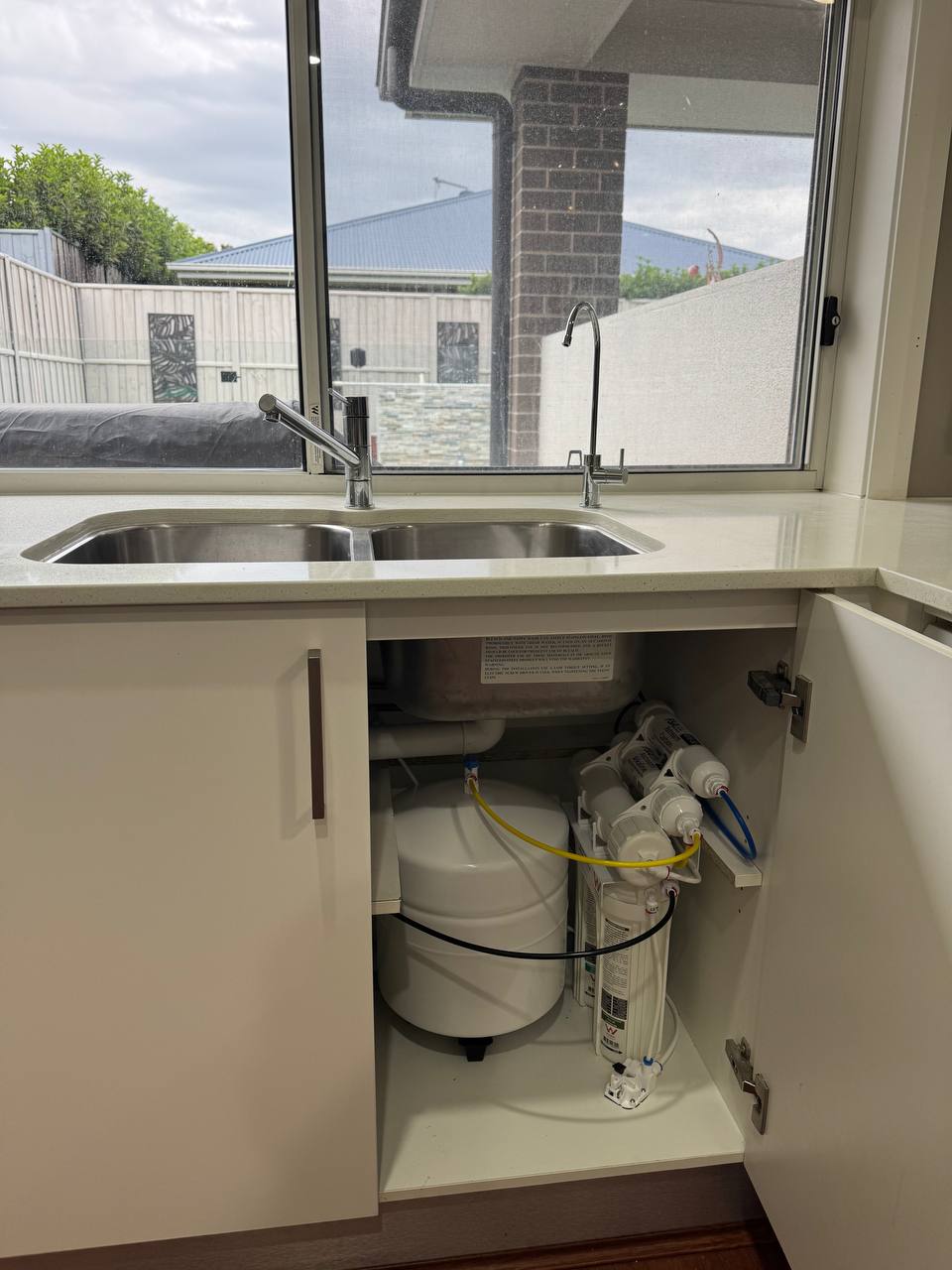
Most customers who have an under-sink filter or RO system installed report that this characteristic taste disappears immediately. It's the most consistently remarked-upon improvement after installation — even by customers who thought they were accustomed to it.
Fluoride in Sydney Water — What You Need to Know
Sydney Water adds fluoride to the drinking supply at concentrations between 0.6 and 1.0 milligrams per litre. Fluoridation is a public health intervention recommended by the National Health and Medical Research Council (NHMRC) for dental health benefits, particularly in communities where other sources of fluoride (toothpaste, dental treatments) may be limited.
The scientific consensus on fluoridation at regulatory levels is that it is safe and beneficial for dental health. Jean-Paul does not recommend filtering fluoride out of personal health ideology. However, some specific situations lead households to choose fluoride removal:
- Infants on formula: Formula prepared with fluoridated water can result in total fluoride intake above recommended levels for very young infants. Some parents choose to use filtered (RO) water for formula preparation as a precaution.
- Personal preference: Some households simply prefer to drink water without any added compounds, regardless of safety classification.
- Existing high fluoride intake: Households with children already receiving high-fluoride dental treatments may want to reduce total intake.
Standard carbon block filters — including under-sink and benchtop units — do not remove fluoride. Only a reverse osmosis membrane removes fluoride effectively (95%+ removal). If fluoride removal is a priority, Jean-Paul installs RO systems from $840.
Microplastics in Sydney Water — The Emerging Issue
Microplastics are tiny plastic particles (less than 5mm) that have been detected in drinking water supplies around the world, including in Australia. They enter the water system from multiple sources: degradation of plastic waste, synthetic textiles, packaging materials and atmospheric deposition.
Sydney Water's standard treatment process — which includes coagulation, filtration and disinfection — removes many particulates but is not specifically optimised for microplastic removal. Research into the health effects of microplastics at drinking water concentrations is ongoing, and Australia has not yet established a maximum guideline value for microplastics in drinking water.
A reverse osmosis membrane is the most effective household filtration technology for microplastic removal. The RO membrane's pore size (0.0001 microns) is far smaller than any microplastic particle, meaning virtually complete removal. For households with particular concern about microplastics, an RO system from $840 provides comprehensive protection.
When Does a Water Filter Actually Make a Difference for Sydney Households?
Jean-Paul's position: a water filter is not an emergency health measure for Sydney households. Sydney's tap water is safe. But a filter genuinely improves quality, taste and the peace of mind of many households. It makes the most practical difference in these specific situations:
- Chloramine taste and odour: If you've always found Sydney tap water slightly off-tasting — particularly in cold water, tea or coffee — a filter will deliver an immediately noticeable improvement
- Infant formula preparation: If you're preparing formula for an infant, an RO system removes fluoride and provides the cleanest possible water for this critical use
- Stopping bottled water purchases: If your household currently buys a significant amount of bottled water, an RO system pays for itself and delivers equivalent or better quality from your own tap
- Older homes with internal pipework: Heritage properties with galvanised steel or copper pipes can introduce sediment and trace metals at the point of use — a point-of-use filter addresses this
- General quality preference: Some households simply want the cleanest possible water from every glass, without concern for specific contaminants. An RO system delivers that
Book Water Filter Installation in Sydney
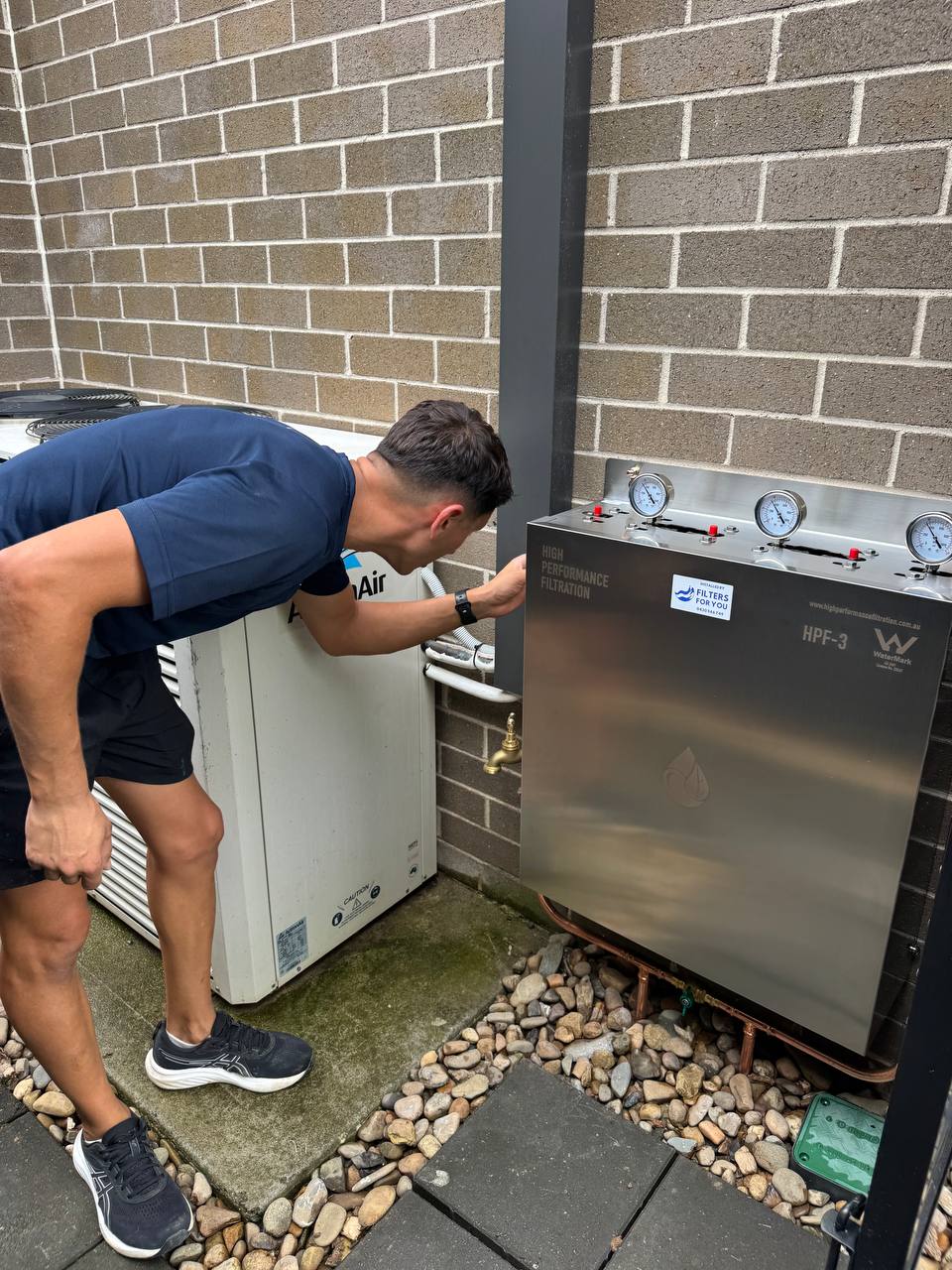
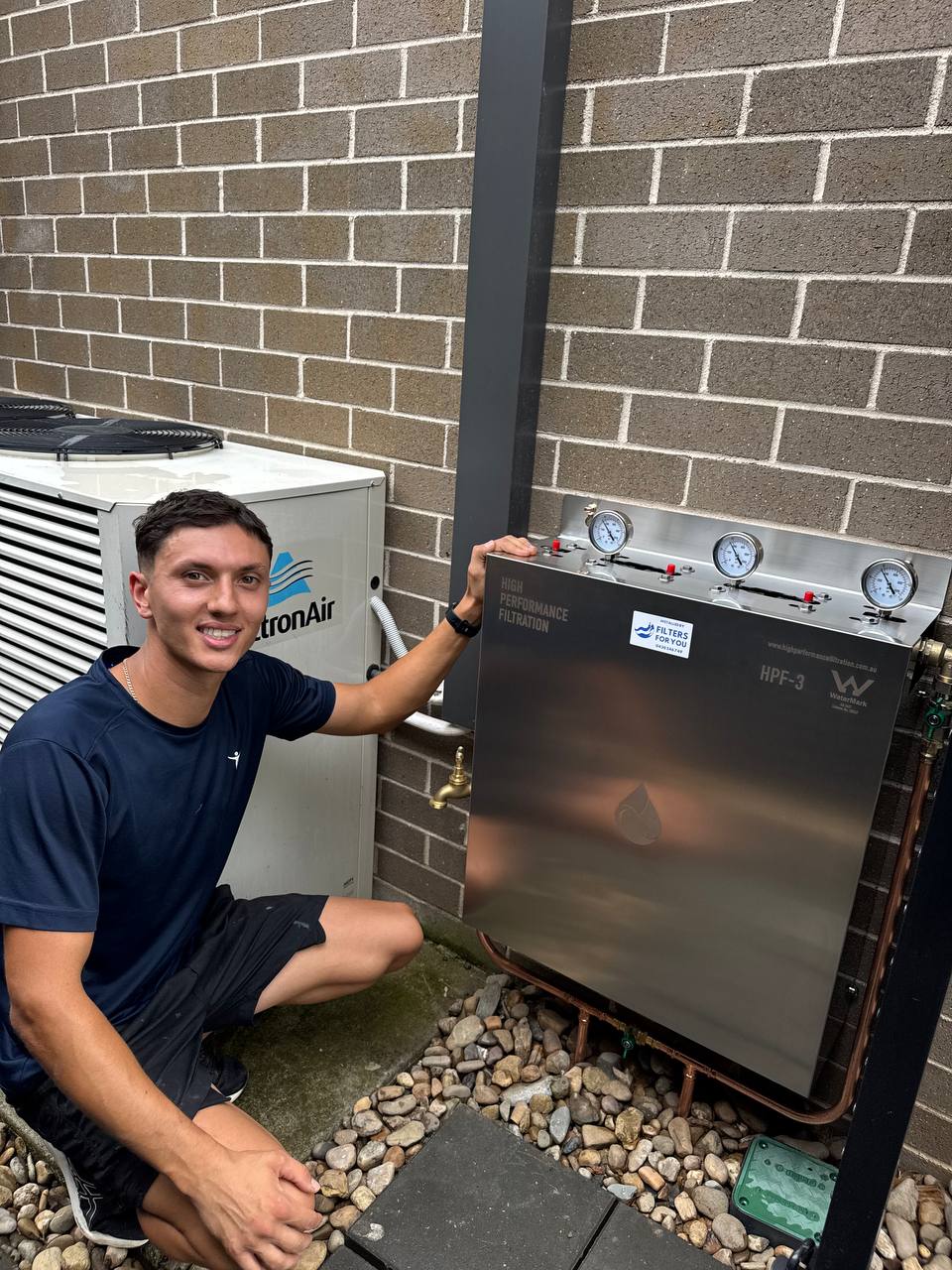
Jean-Paul Barber is a licensed plumber (NSW Lic. 461511C) based in Croydon Park who installs water filtration systems across greater Sydney. He takes an honest approach — he won't tell you Sydney water is dangerous. He'll tell you it's safe, and then explain what a filter actually does and whether it's worth it for your specific situation. Call 0430 546 749 for a direct conversation.
He services all inner and mid-western Sydney suburbs including Croydon Park, Newtown, Leichhardt, Marrickville, Ashfield, Burwood, Strathfield and surrounding suburbs.