What Is in Sydney Tap Water That Concerns Parents of Infants?
Sydney Water produces some of the most extensively treated drinking water in Australia. The supply meets all Australian drinking water guidelines and is safe for healthy adults. But for infants — particularly those who are formula-fed — it is worth understanding what remains in treated Sydney tap water after disinfection.
Sydney Water uses chloramination as its primary disinfection method. Unlike chlorine, which dissipates from water relatively quickly when left to stand, chloramines are more stable compounds that do not off-gas. They are effective at preventing bacterial regrowth throughout the distribution network, but they are harder to remove from drinking water and produce disinfection byproducts of their own — including haloacetic acids and trihalomethanes — when they react with natural organic matter in the water supply.
Fluoride is added to Sydney Water at approximately 0.7mg/L in accordance with NSW Health guidelines. While this level is considered safe and beneficial for dental health in adults and older children, there is specific guidance from the World Health Organisation (WHO) and Food Standards Australia New Zealand (FSANZ) around infant fluoride intake. Infants consuming formula prepared with fluoridated water receive concentrated fluoride exposure relative to their body mass, and if this is the primary source of liquid intake over an extended period, it can contribute to dental fluorosis — a cosmetic condition affecting tooth appearance as they develop.
Nitrates are another compound of specific concern for young infants. Sydney's reticulated supply maintains low nitrate levels, but the guideline threshold for infant health is lower than for adults. For households on tank or bore water, nitrate risk is more significant and RO is especially recommended.
Why Reverse Osmosis Is the Recommended Choice for Baby Formula Water
A reverse osmosis system is the only residential filtration technology that comprehensively addresses fluoride, chloramines, nitrates and disinfection byproducts simultaneously. The RO membrane forces water through pores at 0.0001 microns — so small that dissolved molecules including fluoride ions, nitrates and chloramine compounds simply cannot pass through. What emerges on the other side is water that is genuinely pure at a molecular level.
Standard carbon block under-sink filters do a good job of removing chlorine taste and odour and improving the overall sensory quality of water. For the vast majority of adult household use, a good carbon block filter is perfectly adequate. But they do not remove fluoride and they only partially reduce chloramines. For infant formula preparation, where water is effectively the sole source of hydration for the baby for months at a time, an RO system provides a materially higher standard of purity.
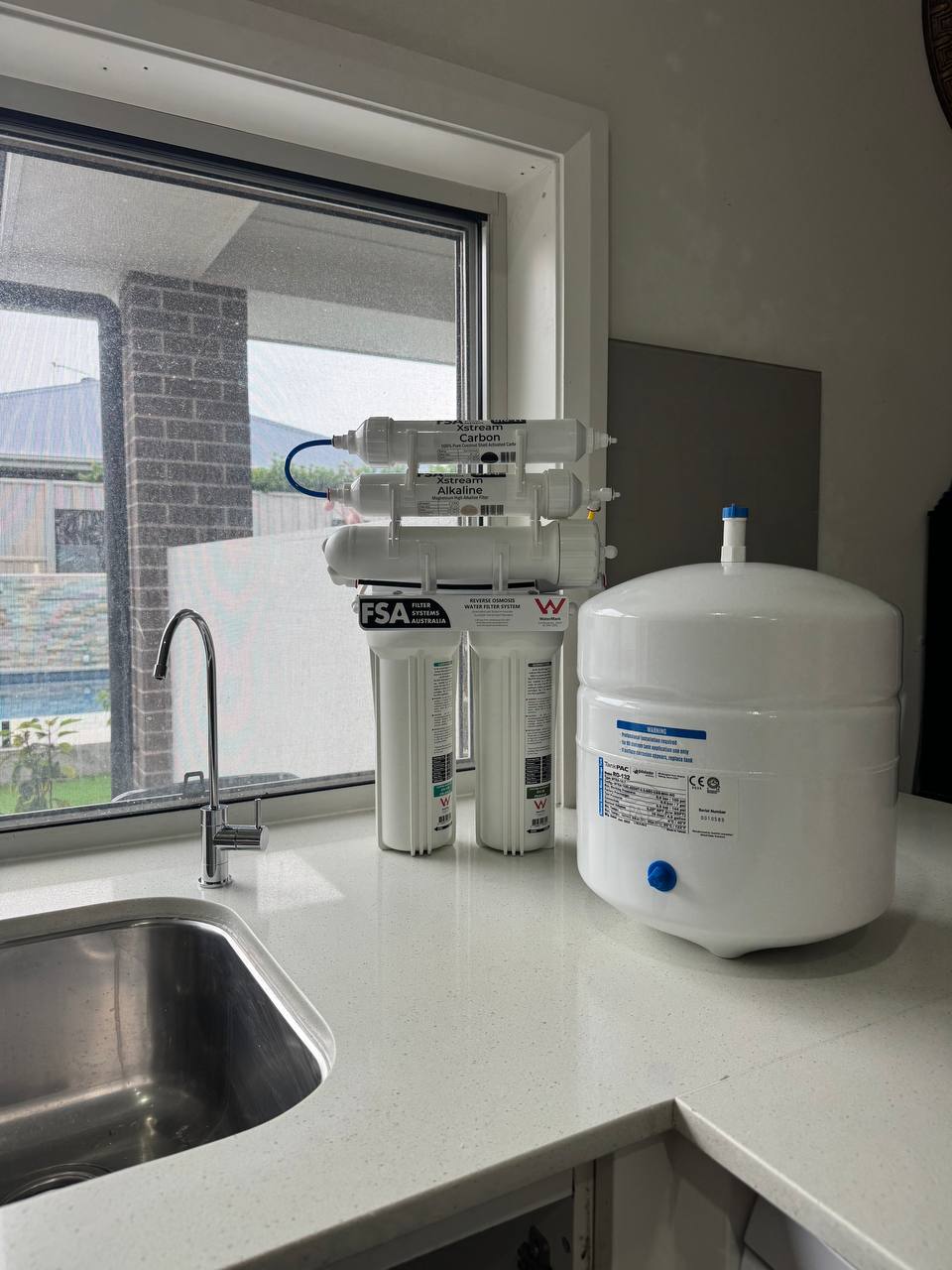
The 5-stage Pure Plus+ reverse osmosis system ($840 installed) is Jean-Paul's most recommended system for families with infants. It removes 99%+ of contaminants and delivers bottled-water-quality water directly from a dedicated tap under your kitchen sink — without the plastic waste, delivery hassle or ongoing cost of purchasing bottled water.
Does RO Water Lack Minerals? Understanding Remineralisation
This is one of the most common questions Jean-Paul receives from expectant and new parents. Reverse osmosis does remove the majority of dissolved minerals from water — including calcium and magnesium. Pure RO water is effectively demineralised. This is a fair concern and worth understanding clearly.
For infant formula preparation, the demineralised nature of RO water is not typically considered a nutritional problem. Infant formula is a precisely formulated product that provides all of the minerals, vitamins and nutrients an infant needs — completely independently of the water used to prepare it. The water is a carrier, not a nutritional source.
However, for households who prefer mineral-enriched filtered water for the whole family — for drinking, cooking and formula — Jean-Paul recommends systems with an alkaline remineralisation stage. The Pure Premium 7-stage RO ($1,180 installed) and the Pure Advanced 5-stage quick-change alkaline RO ($1,281 installed) both include a post-RO mineralisation cartridge that adds calcium, magnesium and potassium back after the membrane stage. This produces water that is pure from a contaminant perspective while also containing naturally beneficial minerals.
FSANZ and WHO Guidelines on Water for Infant Formula Preparation
Food Standards Australia New Zealand (FSANZ) recommends that water used for powdered infant formula preparation be of good microbiological and chemical quality. The WHO Safe Preparation guidelines recommend preparing formula with water that has been boiled and cooled to no less than 70°C to eliminate Cronobacter and other bacteria that can be present in powdered formula at the point of manufacture.
A reverse osmosis system addresses chemical contamination — fluoride, chloramines, nitrates, heavy metals and disinfection byproducts. The boiling step addresses microbiological risk. Used together, boiling your RO-filtered water and allowing it to cool appropriately before use provides both layers of protection. Jean-Paul's consistent recommendation to new parents is this combination — boil RO water, cool to safe temperature, and prepare formula with confidence.
Bottled Water vs Reverse Osmosis — The 12-Month Cost Comparison
Many Sydney parents preparing baby formula default to bottled water — either still spring water or distilled bottled water — to avoid tap water concerns. This is completely understandable, but the cost accumulates faster than most parents anticipate. Consider typical usage for a formula-fed infant:
- A newborn consuming formula requires approximately 600–900ml of prepared formula per day, all of which requires filtered or bottled water
- A family purchasing 1.5L bottles of premium spring water at $1.50–$2.50 per bottle and using two bottles per day will spend $1,095–$1,825 per year on bottled water
- Even at modest usage of one bottle per day, the annual cost is $550–$910
- The Pure Plus+ RO system at $840 installed, with annual cartridge costs of approximately $100–$150, reaches breakeven with bottled water purchasing within 12 to 18 months
- From the second year onward, the RO system delivers pure filtered water effectively for free per litre, with only annual cartridge maintenance required
Beyond cost, eliminating single-use plastic bottles from your household has a meaningful environmental benefit. And the convenience of having clean filtered water on tap at all times — immediately available when you need to prepare a bottle at 3am — is consistently cited by Jean-Paul's customers as one of the most valued aspects of having an RO system installed.
Jean-Paul's Installation Process and Baby-Safe Standards
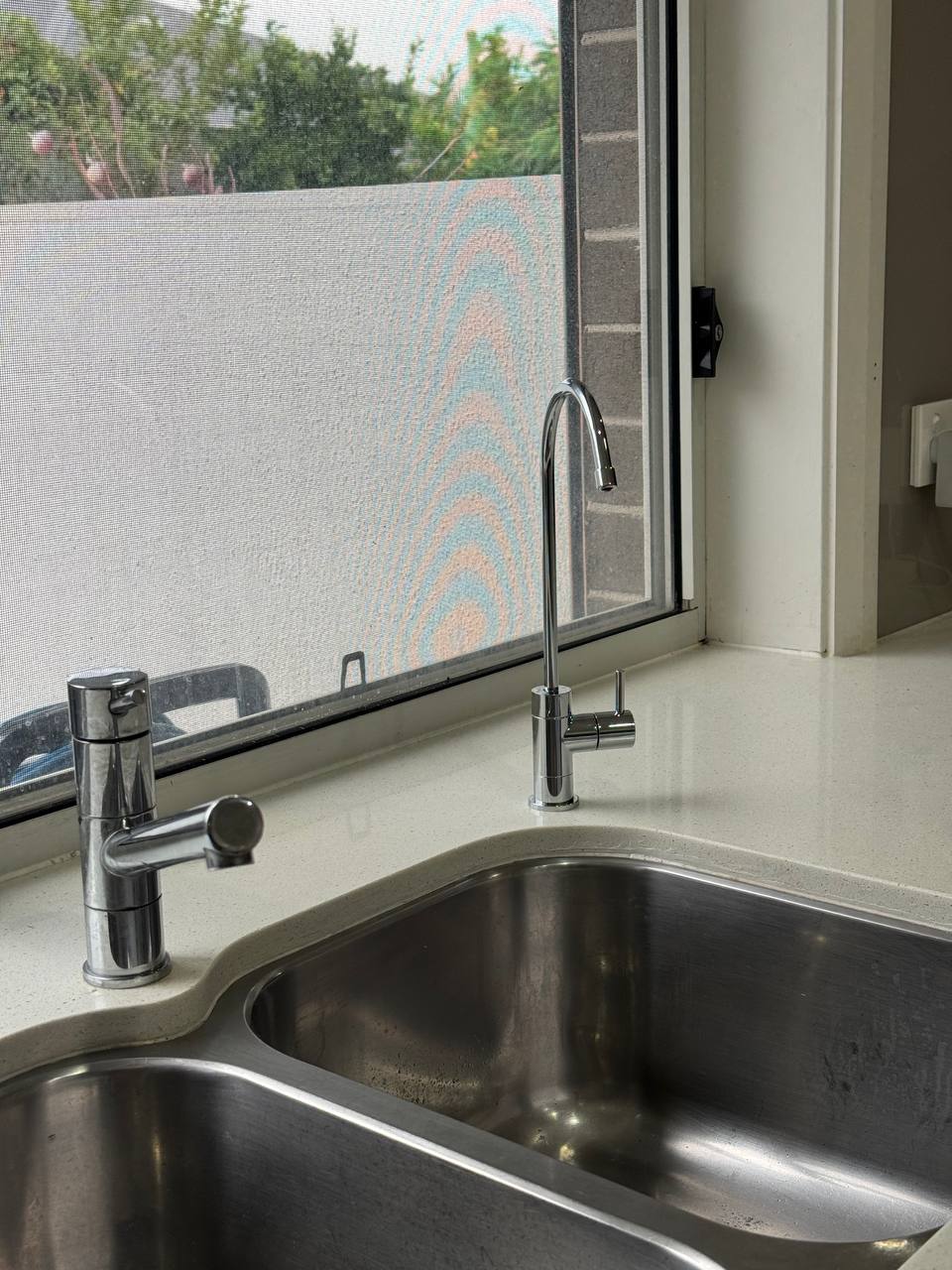
Jean-Paul arrives on time, brings all equipment and hardware required for the installation, and completes a full under-sink RO installation in 1.5 to 2 hours. He installs a dedicated filtered water tap alongside your existing kitchen taps — the tap supplied is clean and modern. The system sits neatly under the sink with all connections made to the cold water supply line inside the cabinet.
Before leaving, Jean-Paul walks you through the system in full: how to check the filter status indicator, how to flush the system after installation, the recommended cartridge replacement schedule, and what to expect in terms of flow rate and tank capacity. He answers every question thoroughly — he installs for many families with young children and understands the specific concerns new parents have around water quality.
Jean-Paul encourages expectant parents to book installation well before their due date. Most Sydney installations are scheduled within 3 to 5 business days of enquiry. Having your RO system in place before your baby arrives means clean, pure water is available from the very first day it is needed. There is no better time to make the investment.
The Peace of Mind of Knowing Exactly What Is in Your Baby's Water
Jean-Paul has installed water filtration systems for hundreds of Sydney families, including many parents preparing for a new baby or with young infants at home. The feedback he hears consistently is not just about water quality metrics — it is about confidence. The peace of mind that comes from knowing that fluoride is not getting through, that chloramines have been removed, that what goes into your baby's formula bottle has been filtered to the highest standard available.
That confidence is not something a water quality report can fully give you. It comes from having your own system, installed properly by a licensed plumber, working every single day in your own kitchen. Jean-Paul installs every system personally because he believes the standard of the installation matters as much as the quality of the system itself. No shortcuts, no subcontractors, no mess left behind. Just clean water — reliably, every time.