Why Water Filter Maintenance Matters
Most people install a water filter and feel confident their water is clean — and it is, initially. But every water filtration cartridge has a finite capacity. Once a carbon block is saturated, it loses its ability to remove chlorine, chloramines and other contaminants. Flow rate drops. Water quality deteriorates. And in the worst cases, a severely overdue carbon cartridge can actually begin releasing previously captured contaminants back into the water — a process known as desorption.
For reverse osmosis systems, an unchecked pre-filter causes sediment to reach the delicate RO membrane prematurely, forcing an expensive membrane replacement far earlier than necessary. Regular pre-filter maintenance is the single most cost-effective thing you can do to protect your RO system's long-term performance.
The good news is that proper maintenance is neither complicated nor expensive when you stick to the schedule. Jean-Paul makes it straightforward: he notes the service date on your system at installation, supplies all cartridges and offers annual service plans that take care of everything.
Replacement Schedules by System Type
Pure Essential — Twin Stage Under Sink Carbon Filter
The Pure Essential uses two filtration stages: a sediment and carbon pre-filter followed by a compressed carbon block post-filter. Both stages should be replaced on the following schedule:
- Pre-filter stage: every 6 to 12 months, depending on water usage and local water quality
- Post-filter stage: every 12 months
A household of two adults with moderate water usage can typically go 12 months between full changes. A family of four or five, or a household in a Sydney suburb with higher sediment levels, should change the pre-filter at the 6-month mark.
Pure Plus+ and Pure Premium — Reverse Osmosis Systems
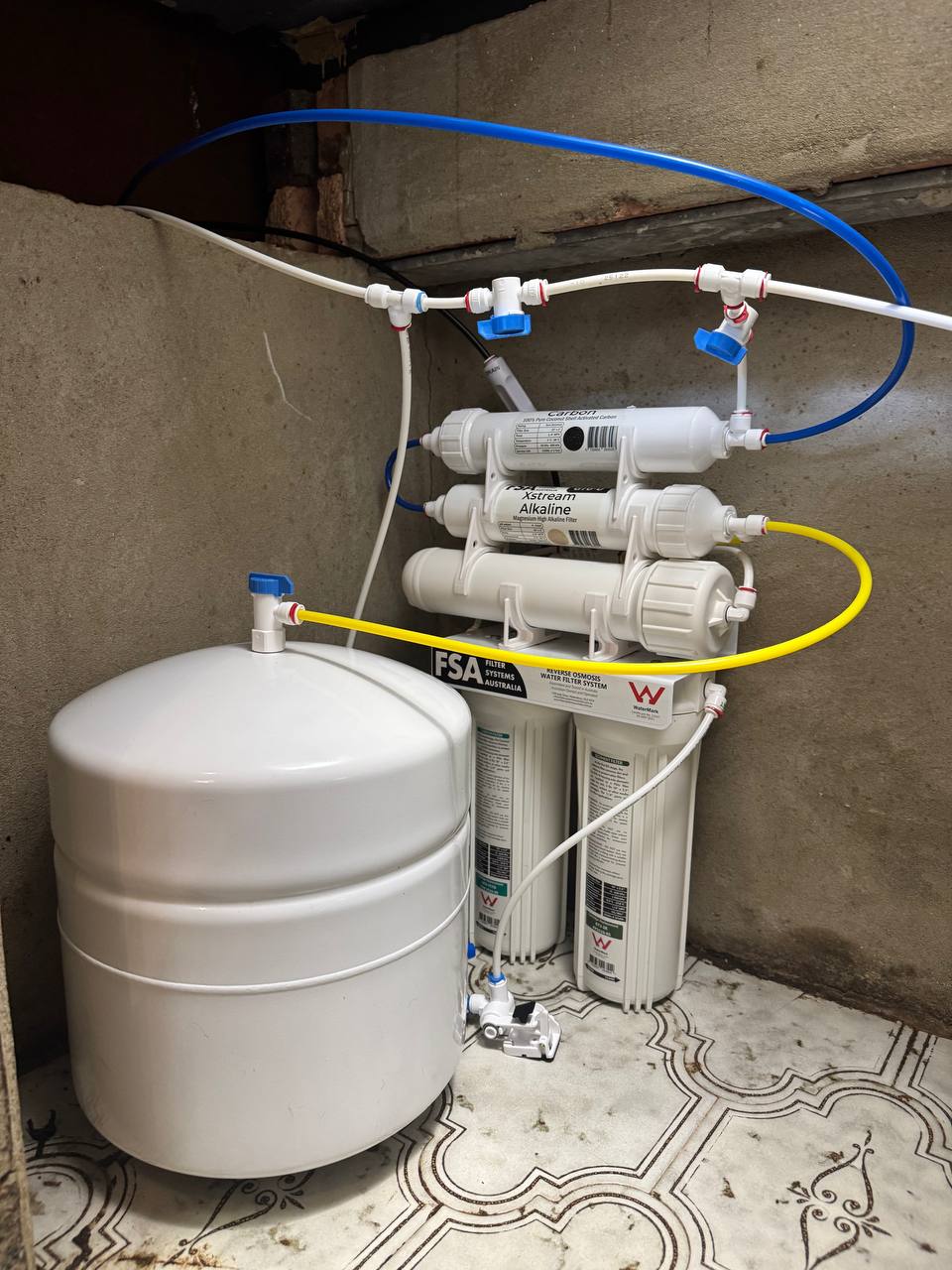
Reverse osmosis systems have multiple filtration stages, each with different service intervals. This is the recommended schedule for the Pure Plus+ (5 stage) and Pure Premium (7 stage) systems:
- Sediment pre-filter: every 6 to 12 months — this is the most important stage to maintain on schedule
- Carbon block pre-filter: every 12 months
- RO membrane: every 2 to 3 years with good pre-filter maintenance
- Post-polishing/mineralisation filter: every 12 months
- Alkaline remineralisation stage (Pure Premium): every 12 months
The RO membrane is the most expensive component. Keeping the pre-filter stages on schedule is the primary way to protect it and extend its life to the full 2–3 year period. Neglecting the pre-filter is the most common cause of premature membrane failure.
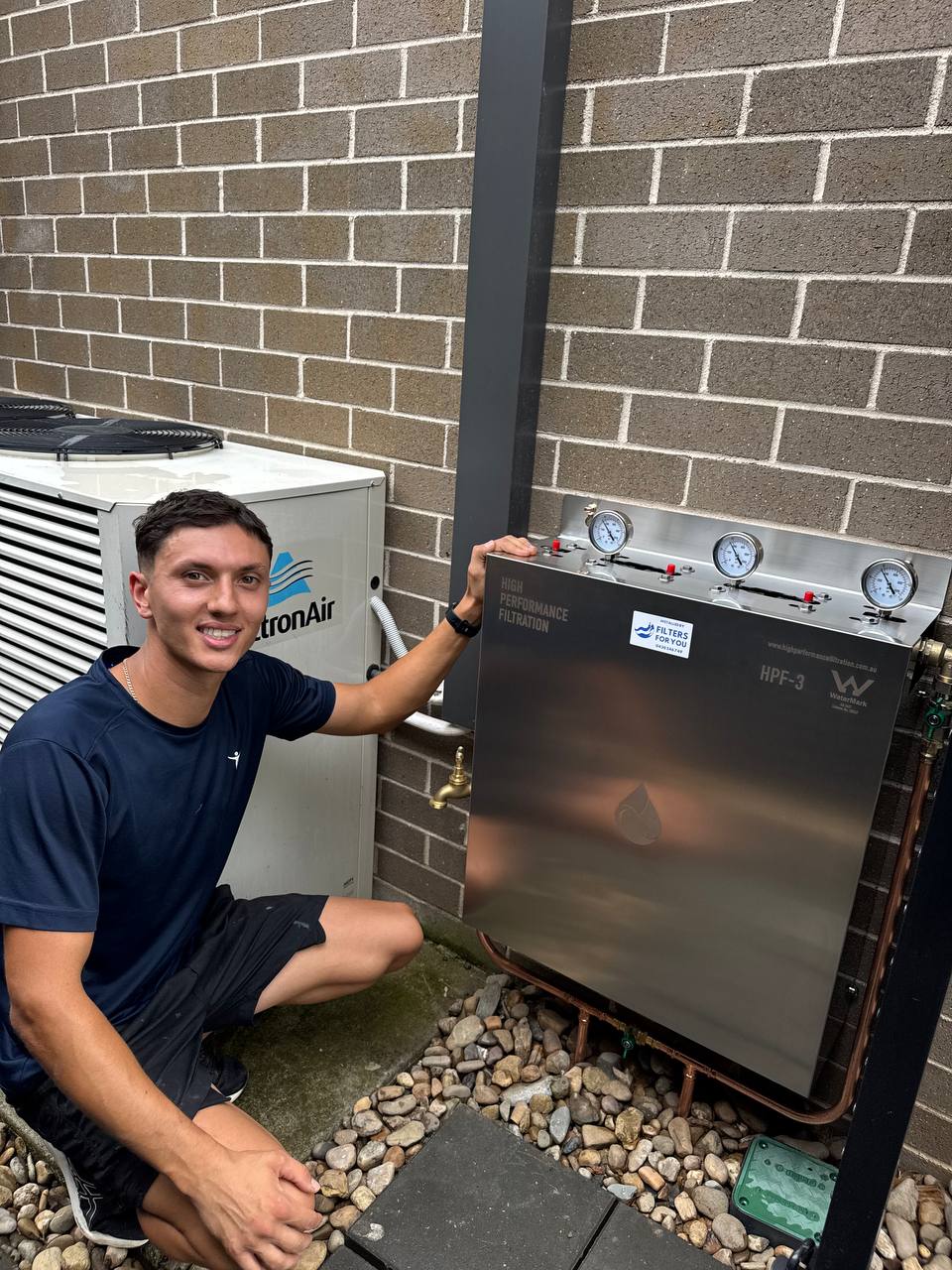
HPF-3 Whole House Filtration System
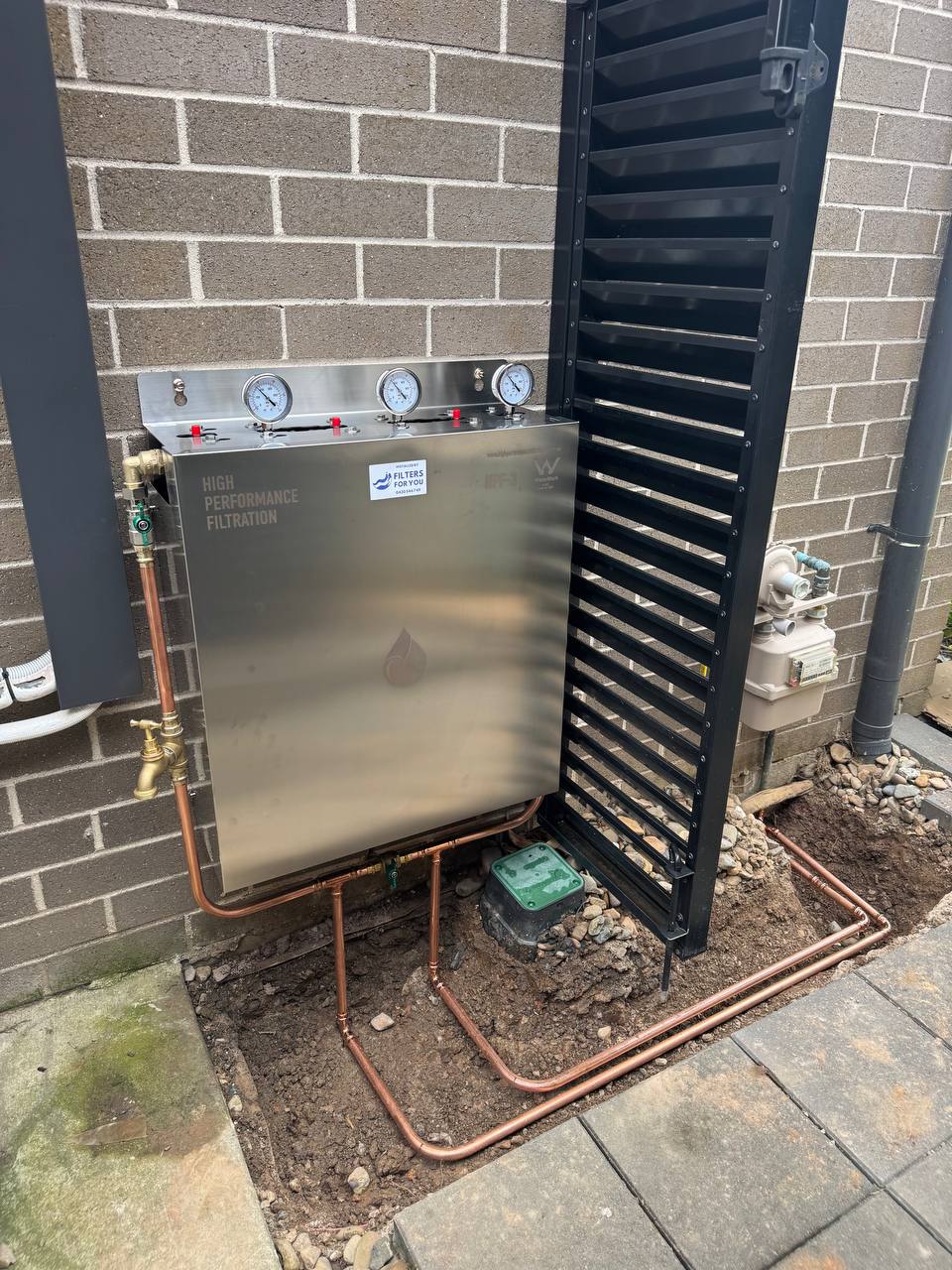
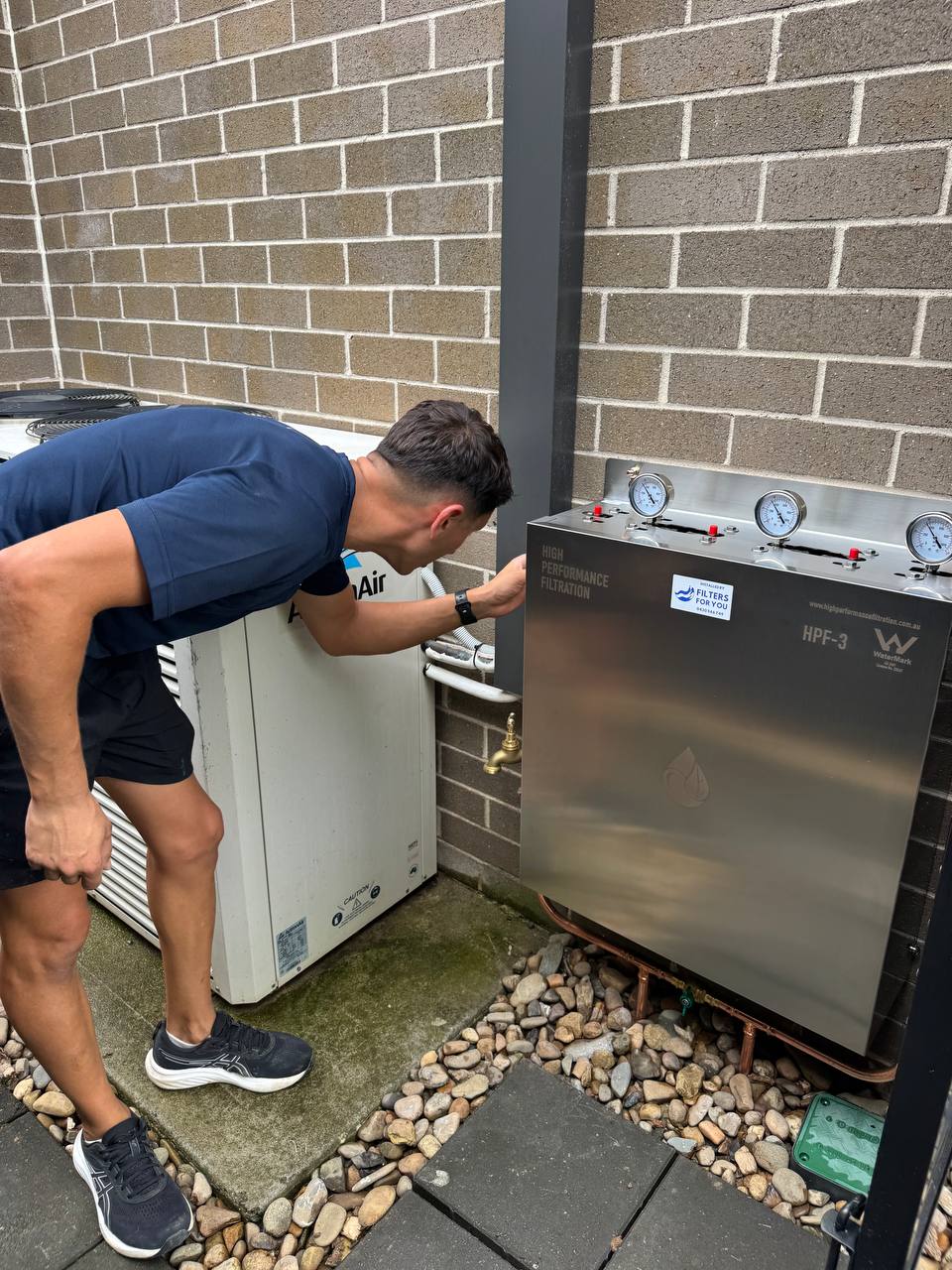
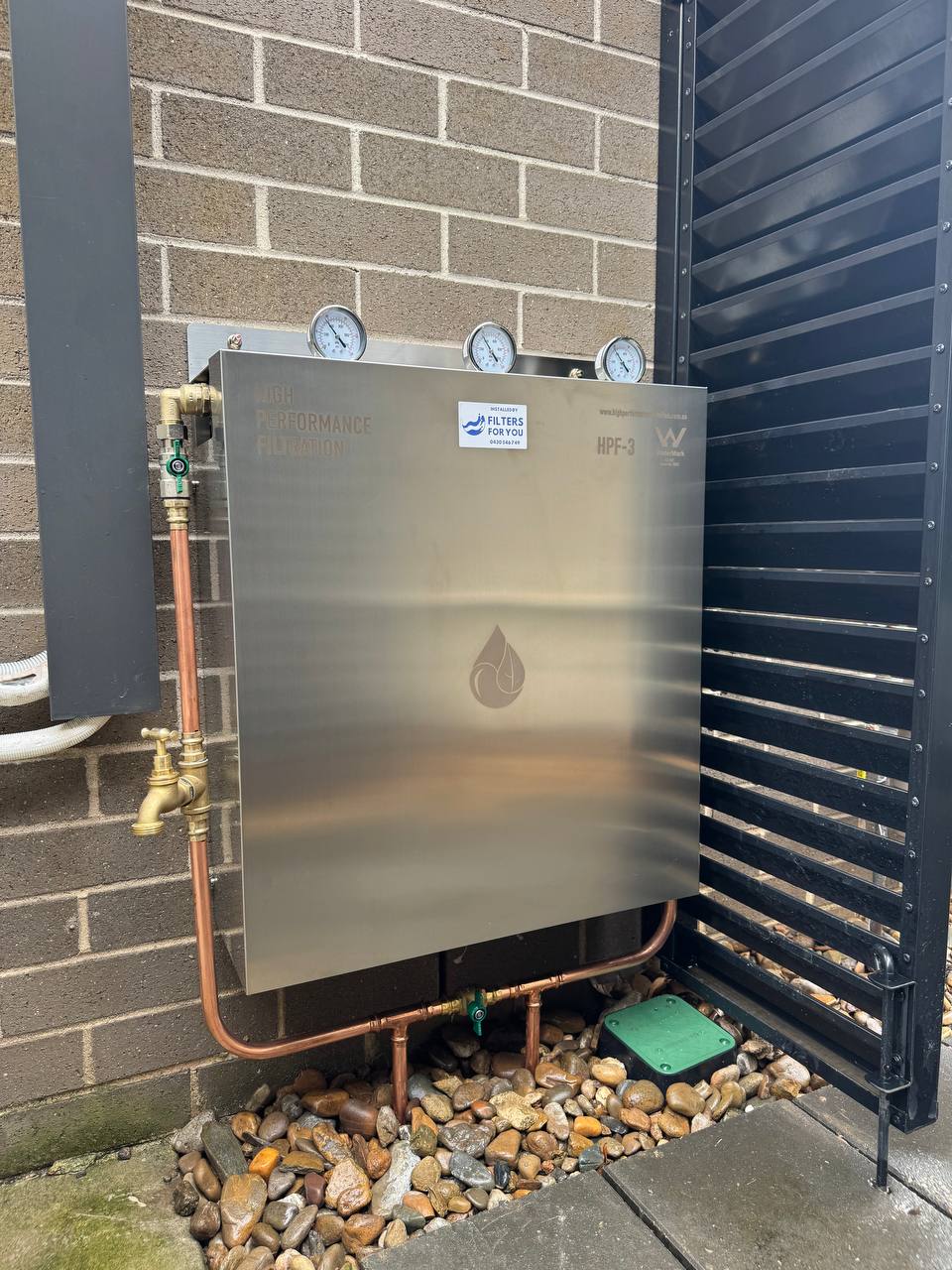
The HPF-3 uses a single high-capacity carbon block cartridge installed in a housing beside your water meter or mains entry. The replacement schedule is:
- Main filter cartridge: every 12 months as a general guide
- Higher-usage households or properties in suburbs with higher sediment content may benefit from replacement at 9 months
- Jean-Paul checks the pressure drop across the filter at each annual service to confirm whether the timing is appropriate for your specific property
Pure Advanced — Quick Change Alkaline RO
The Pure Advanced uses a twist-lock quick-change cartridge design that is specifically engineered for easy DIY replacement without any tools or specialist knowledge. All filtration stages can be changed annually using a simple twist-and-pull mechanism. Jean-Paul walks you through the process at installation and it takes less than 10 minutes once you have done it once.
Warning Signs Your Filter Needs Changing
Even without a strict schedule, your filter will often tell you when it is overdue. Watch for these signs:
- Reduced flow from your filtered tap: the most common early indicator that a pre-filter or carbon stage is becoming clogged
- Return of chlorine taste or odour: means the carbon media is no longer removing chlorine effectively
- Discolouration in the filtered water: can indicate sediment breakthrough or cartridge degradation
- Unusual smell: a musty or earthy smell can indicate bacterial growth in an overdue filter housing
- Lower water pressure throughout the home (HPF-3): indicates the whole house cartridge is restricting flow
- TDS meter reading increasing (RO systems): higher dissolved solids in the filtered water suggest membrane performance is declining
Genuine vs Generic Cartridges — Why It Matters
When your filter is due for a cartridge change, you will find generic replacement cartridges available online at lower prices than the genuine components Filters For You supplies. The price difference is real — but so is the performance difference.
Genuine cartridges are manufactured to the exact specifications of your filter housing — the correct micron rating, the correct carbon media grade, the correct outer diameter and end cap design to create a proper seal. A generic cartridge with slightly different dimensions may allow channelling — water flowing around the sides of the cartridge rather than through it — meaning contaminants pass through unfiltered.
For reverse osmosis membranes in particular, generic alternatives vary significantly in their actual rejection rates. A membrane rated at 98% TDS rejection by a reputable manufacturer may deliver only 80–85% rejection as a low-cost alternative, meaning a significant portion of contaminants including fluoride and heavy metals are not actually being removed.
Jean-Paul supplies genuine cartridges for all systems he installs. Call 0430 546 749 to order the correct cartridges for your system.
Jean-Paul's Annual Service Plan
The simplest way to keep your water filtration system performing is to enrol in a Filters For You annual service plan. Here is how it works:
- Jean-Paul contacts you approximately one month before your service is due
- He visits your home at a time that suits you, bringing all required cartridges
- He replaces every due cartridge, inspects all fittings and connections, tests flow rate and water quality, and resets the service date on your system
- Service plan members receive discounted cartridge pricing compared to one-off orders
- Any issues identified during the service visit are addressed immediately or quoted clearly with no obligation
For most Sydney households, the annual service plan adds around $200–350 to the total annual cost of ownership depending on your system type. For a family of four, that is less than $1 per day for clean, professionally maintained filtered water.
DIY Cartridge Replacement vs Professional Service
Not all maintenance needs to be done by a plumber. Here is a clear breakdown of what you can do yourself and what warrants a professional service call:
Generally DIY-friendly:
- Pure Advanced quick-change cartridges — twist-lock design, no tools required
- Most standard sump-style cartridges where the shut-off valve is on the filter housing itself
- Cartridge changes on systems Jean-Paul has walked you through at installation
Recommend a professional service visit:
- RO membrane replacement — requires system flushing and recommissioning
- HPF-3 whole house cartridge — involves shutting off the mains water supply to the property
- Any cartridge change where you are unsure about the correct sequence or have not done it before
- Systems showing reduced pressure, unusual sounds or signs of leaking at connections
If in doubt, call Jean-Paul. A 10-minute conversation will tell you whether you can handle it yourself or whether a visit makes more sense.
Sydney Water Quality and Its Effect on Filter Life
Sydney's water supply uses chloramines — a combination of chlorine and ammonia — as the primary disinfectant in most distribution zones. Chloramines are more persistent than plain chlorine and require carbon media with a higher contact time to effectively remove. Standard carbon blocks rated for chlorine may underperform when the actual contaminant is chloramine.
All systems installed by Filters For You use carbon media rated and tested for chloramine removal in Sydney's specific water supply chemistry. This is one reason why generic cartridge replacements can underperform — they may be rated for chlorine removal but not for chloramines.
Sediment levels also vary significantly across Sydney suburbs. Properties in areas served by older distribution infrastructure — parts of the Inner West, Eastern Suburbs and some heritage areas of the Lower North Shore — tend to see higher sediment loads, which accelerates pre-filter saturation. Jean-Paul factors this in when recommending service intervals for your specific suburb.
Five-Year Cost of Ownership with Maintenance
Understanding the full cost of ownership helps you plan and budget. Here is what five years looks like for each system when maintained properly:
- Pure Essential: $550 install + approx. $100/yr in cartridges = around $1,050 over 5 years
- Pure Plus+ RO: $840 install + approx. $175/yr in cartridges = around $1,715 over 5 years
- Pure Premium 7-stage RO: $1,180 install + approx. $200/yr = around $2,180 over 5 years
- HPF-3 Whole House: $3,150 install + approx. $200/yr = around $4,150 over 5 years
These are approximate figures for a typical Sydney household. Compare that to purchasing bottled water for a family: at $15–20 per week, a family spends $3,900–5,200 on bottled water over five years — with no shower filtration, no protection for appliances and significant plastic waste. A water filtration system pays for itself for most Sydney families within two to three years.
How to Check Your Filter's Service Date
Jean-Paul applies a service sticker to every system he installs noting the installation date and the recommended next service date. If you cannot locate this sticker, or if you are unsure of your system's service history, call 0430 546 749 with your system model and Jean-Paul will advise on the appropriate next step — whether that is an immediate cartridge change or a full service visit.
Do not guess when your filter was last serviced. An undated filter that may be 18 months overdue provides no meaningful filtration and may actively be releasing contaminants into your water. When in doubt, change the cartridges.