Why Tap Water Isn't Ideal for Babies and Young Children
Sydney's tap water meets the Australian Drinking Water Guidelines, which are set for the average adult. The guidelines do not specifically account for the higher vulnerability of infants, whose bodies are fundamentally different from adults in several ways that affect how they respond to waterborne contaminants.
Babies consume a much higher volume of water relative to their body weight than adults. A formula-fed infant may take in around 150ml of water per kilogram of body weight per day — compared with roughly 40ml per kilogram for an adult. This means any contaminant in the water is effectively concentrated at a much higher dose relative to the baby's body mass.
Additionally, the kidneys of young infants are not yet fully developed and cannot process certain minerals and contaminants as efficiently as mature kidneys. The blood-brain barrier in newborns is also more permeable, meaning neurotoxic contaminants like lead have greater potential to cause developmental harm in infants than in adults exposed to the same water.
Contaminants of Concern for Infants in Sydney Water
Sydney Water treats all supply with a combination of chlorine and chloramines. While this disinfection process is essential for preventing waterborne disease, it introduces chemical compounds that some families prefer to remove before their water reaches their baby:
- Chloramines — formed when chlorine combines with ammonia, chloramines are harder to remove than chlorine alone and produce a distinctive taste and odour. Research has linked long-term chloramine exposure to trihalomethane formation — regulated disinfection byproducts that are present at low levels in treated water.
- Fluoride — added to Sydney's water supply at around 0.6–1.0mg/L for dental health benefits. However, for infants under 6 months who are consuming formula prepared exclusively with tap water, the National Health and Medical Research Council (NHMRC) recommends considering filtered water to avoid potential dental fluorosis from excess fluoride intake during tooth development.
- Nitrates — naturally occurring and can reach elevated levels in some areas. High nitrate levels in formula water can cause methemoglobinaemia (blue baby syndrome) in infants under 6 months. Reverse osmosis removes nitrates effectively.
- Heavy metals and lead — Sydney Water's network is generally free of lead, but lead can leach from older household plumbing, solder and fittings, particularly in heritage homes. Infants are more sensitive to lead's developmental effects. RO and quality carbon filters reduce heavy metal levels.
- Microplastics — detected in urban water supplies globally. There are no current Australian guidelines for maximum levels in drinking water, and long-term health effects are still being studied. RO membranes effectively filter microplastics.
- Disinfection byproducts (DBPs) — including trihalomethanes (THMs) and haloacetic acids (HAAs) formed during chlorination. These are regulated and generally at safe levels for adults, but some parents prefer to minimise exposure for young children.
What Makes Water "Baby Safe"?
There is no single Australian standard specifically defining "baby safe" water beyond the general Australian Drinking Water Guidelines. However, health authorities and paediatric organisations generally recommend the following for water used in infant formula preparation and drinking:
- Free from microbial contamination (tap water and filtered tap water both meet this standard)
- Low in nitrates — below 50mg/L (Sydney's supply is well within this)
- Low in lead and heavy metals
- Low in total dissolved solids (TDS) — RO systems produce very low TDS water
- Free from excessive fluoride for infants under 6 months consuming formula
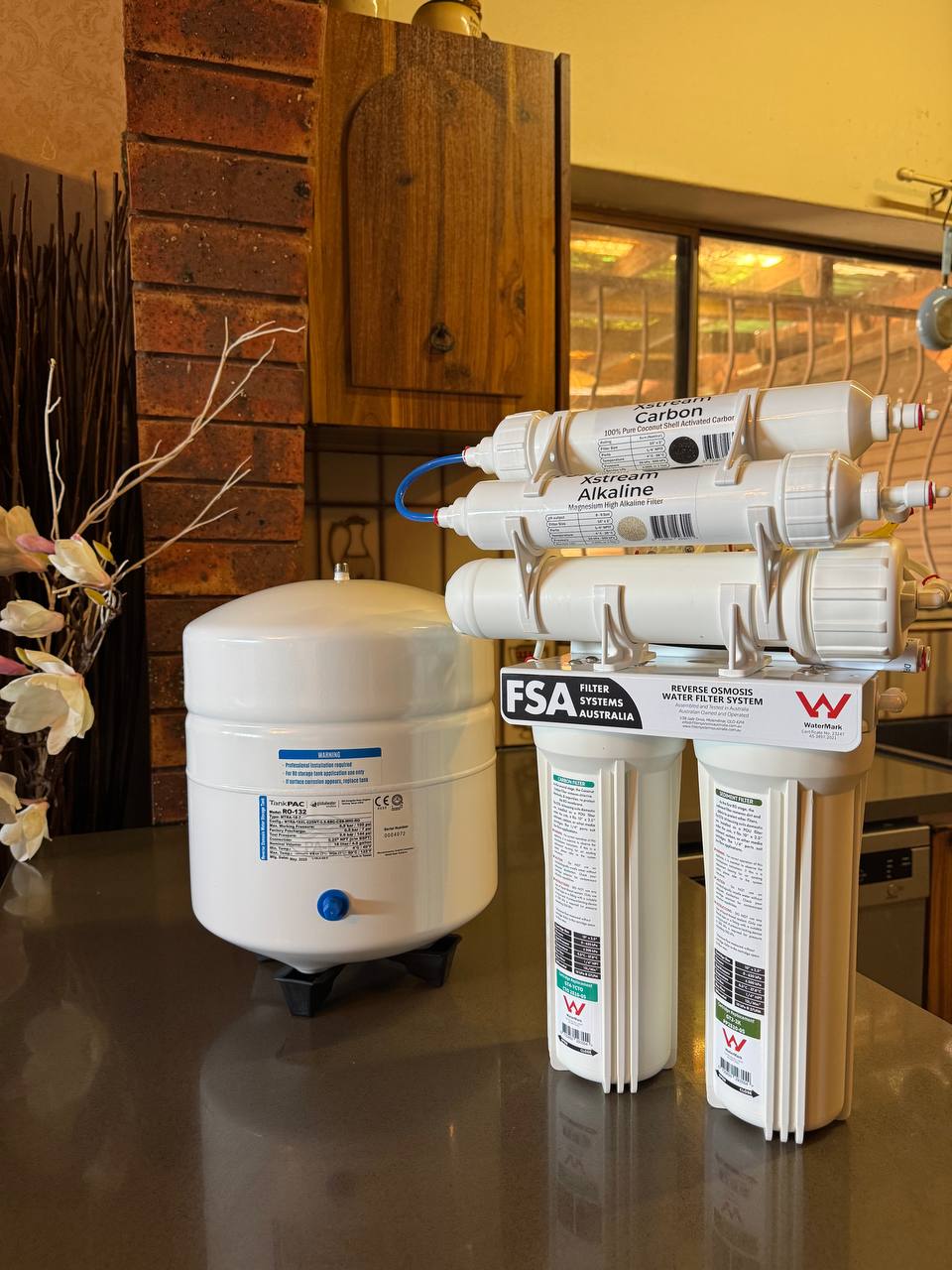
A reverse osmosis system addresses all of these concerns in one installation. The Pure Plus+ 5-Stage RO ($840) reduces TDS by approximately 95%, removes fluoride, nitrates, heavy metals, chloramines and microplastics. This brings your tap water to a quality that exceeds most bottled water standards — and unlike bottled water, it's unlimited, free of plastic leaching, and always fresh.
Reverse Osmosis for Baby-Safe Water
Reverse osmosis (RO) is the most effective residential water filtration technology available. It works by pushing water through a semi-permeable membrane that blocks dissolved contaminants while allowing water molecules to pass through. A well-maintained RO system removes approximately:
- 95–98% of fluoride
- 95–99% of nitrates
- 95–99% of heavy metals including lead, arsenic and mercury
- Up to 99% of chloramines and chlorine
- 99%+ of microplastics
- Bacteria and viruses (Sydney's treated tap water is already free of these)
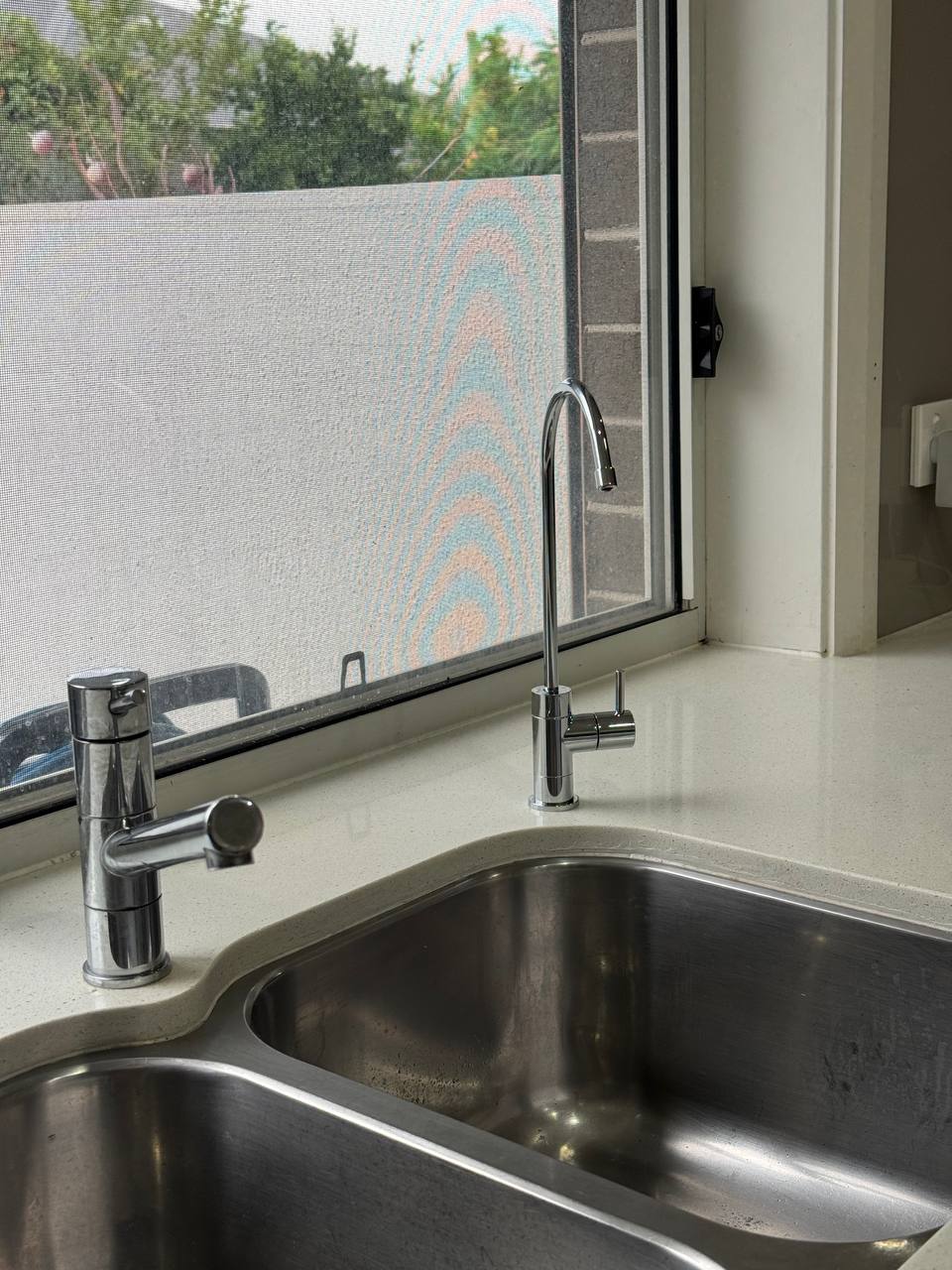
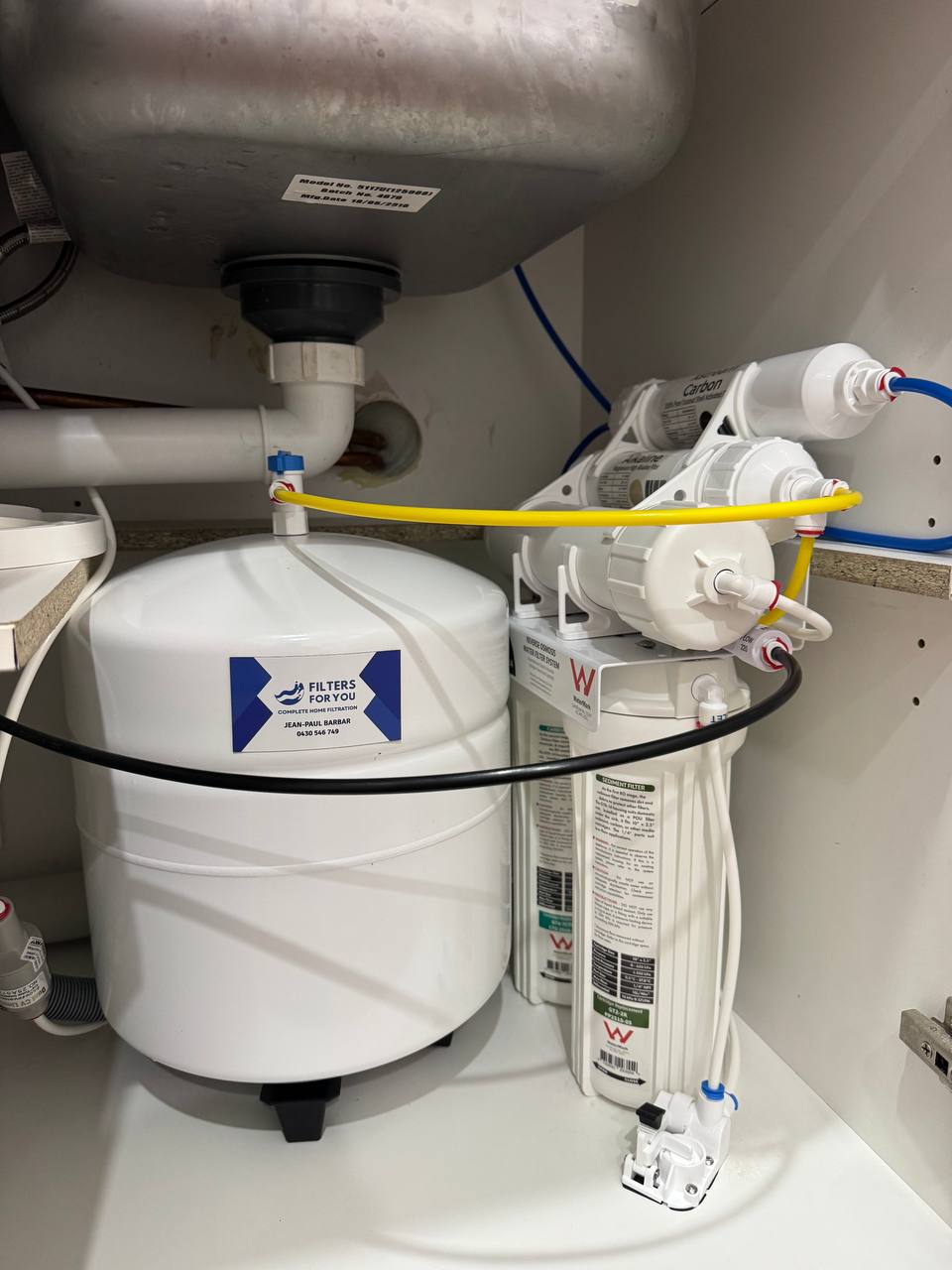
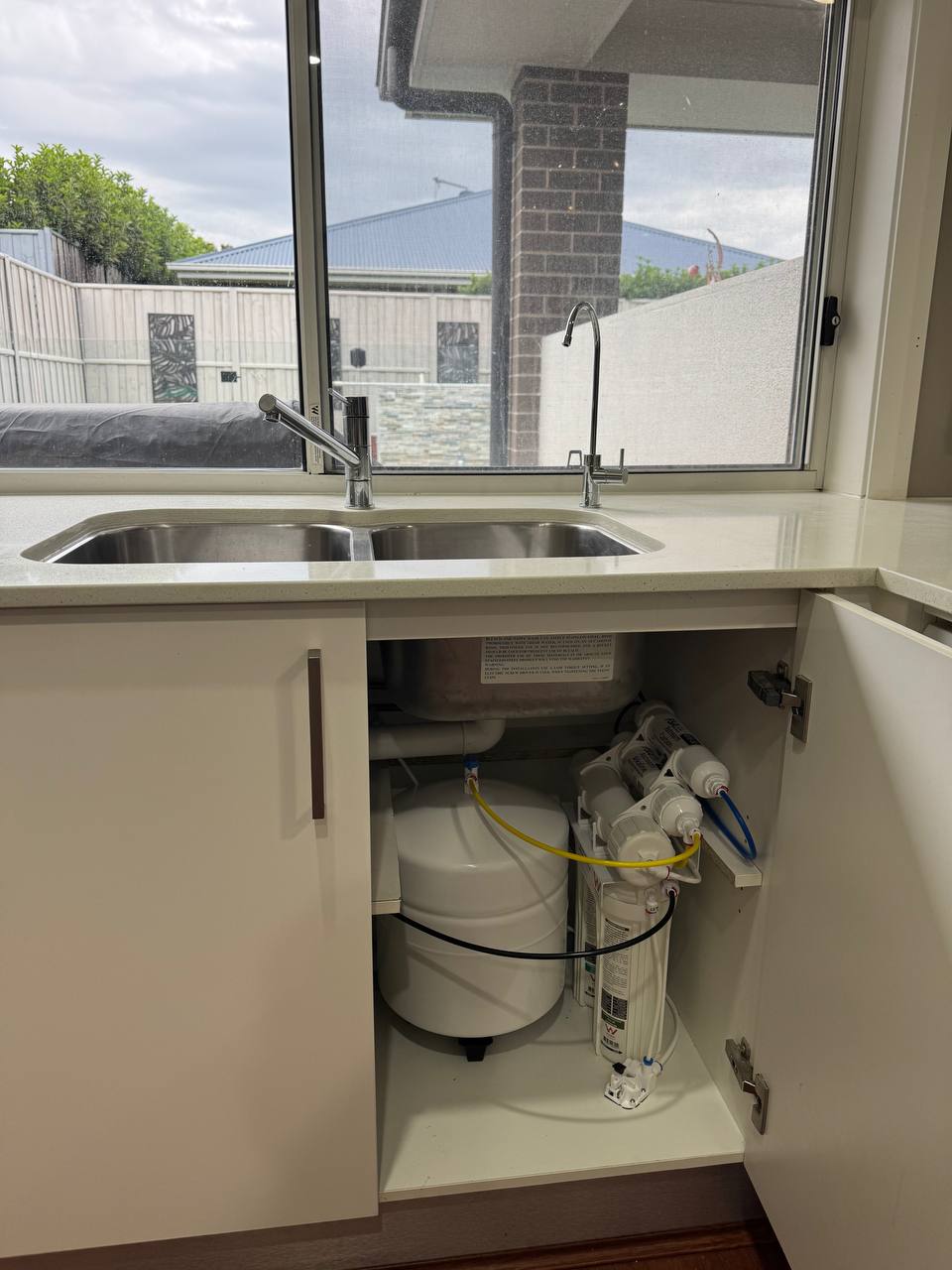
Jean-Paul recommends the Pure Plus+ 5-Stage RO ($840) or Pure Premium 7-Stage RO ($1,180) for families with babies and young children. Both systems install under the kitchen sink, connect to a dedicated filtered tap at the bench, and produce clean water on demand stored in a small pressure tank. Installation takes approximately two hours and requires no structural changes to your home.
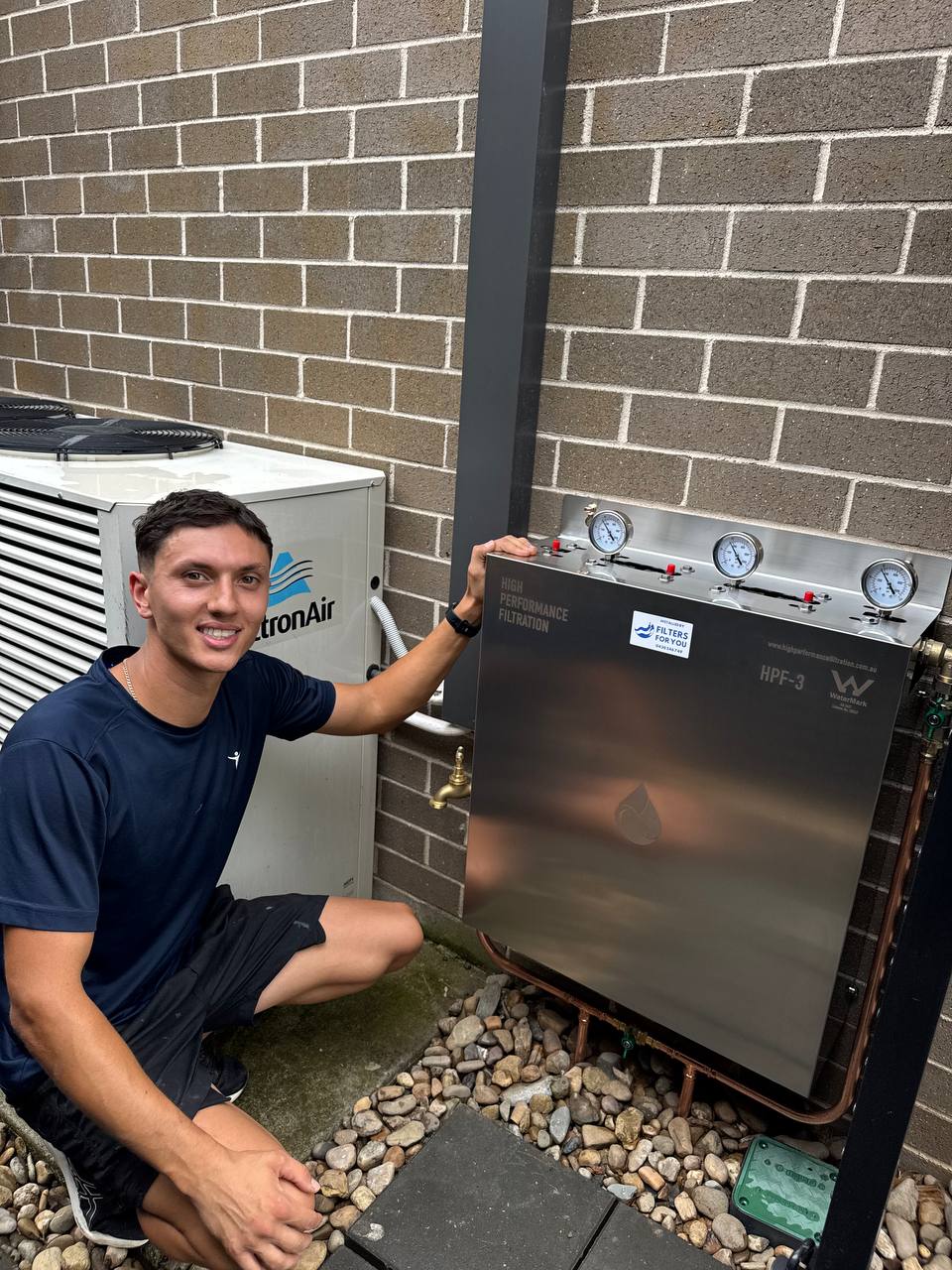
If you'd also like to filter bathwater for your baby, Jean-Paul recommends the HPF-3 Whole House system (from $3,150), which filters every tap and shower in the home at the mains.
Under-Sink Filter as a Minimum Standard
If a full reverse osmosis system isn't in the budget right now, the Pure Essential twin-stage under-sink filter ($550) is a worthwhile improvement over unfiltered tap water. It removes chlorine, sediment, taste and odour effectively, producing noticeably cleaner-tasting water for your family. Note that it does not remove fluoride, nitrates or heavy metals — if these are priorities, an RO system is the correct choice.
Australian Water Safety Standards and Why Filtration Exceeds Them
Australia's Drinking Water Guidelines are set conservatively and provide a genuine safety margin for healthy adults. Sydney Water complies with these guidelines and regularly publishes its water quality data. The water coming out of your tap is not unsafe by regulatory standards.
However, the guidelines are designed for the average adult — not for the most vulnerable members of your household. Filtration is not about distrust of Sydney Water; it's about going a step further to protect the people in your home who are most sensitive. Many health-conscious Sydney families with babies choose to filter their water for the same reason they choose organic food — not because non-organic is dangerous, but because reducing unnecessary chemical exposure is a reasonable and achievable precaution.
A professionally installed reverse osmosis system gives you water that consistently exceeds the Australian Drinking Water Guidelines for the contaminants that matter most to infant health.
Jean-Paul's Approach to Homes with Young Children
Jean-Paul has installed water filtration systems in family homes across Sydney — many of them for parents of newborns who want the reassurance of genuinely clean water from day one. He understands the stakes and always takes the time to explain exactly what each system removes, what it doesn't, and what maintenance it requires to keep performing at its best.
Every installation includes a full system walkthrough. Jean-Paul shows you exactly how your filter works, how to check that it's functioning correctly, and how to arrange cartridge replacement when the time comes. He also adds you to the service reminder system so you're never caught with a worn-out filter you didn't know needed changing.
There are no upsells on the day of installation. You get the system you agreed to, installed to a professional standard, with the price quoted upfront. Call Jean-Paul on 0430 546 749 to discuss which system is right for your family.
Book a Baby-Safe Water Filter Installation Across Sydney
Jean-Paul installs baby-safe water filtration systems across all of Greater Sydney — from the eastern suburbs and inner west to the Hills District, St George, northern beaches and everywhere in between. Most installations are scheduled within 3–5 business days. Call 0430 546 749 or complete the quote form below.
You can also read more about all our water filter systems, reverse osmosis filtration, or our under-sink water filter options. See also our guide on Sydney water safety and our water filter cost guide.