Why Sydney Water Uses Chlorine and Chloramines
Chlorination of drinking water is one of the most important public health advances of the 20th century. Before widespread chlorination, waterborne diseases including typhoid fever, cholera and dysentery were significant causes of illness and death in Australian cities. Sydney Water began chlorinating its supply in the early 1900s and the practice has been standard ever since.
Modern Sydney Water treatment uses two disinfectants:
- Free chlorine — the primary disinfectant added at water treatment plants. It reacts quickly with organic matter and bacteria but breaks down relatively fast in the distribution network.
- Chloramine — formed by combining chlorine with a small amount of ammonia. Chloramine is more stable than free chlorine and persists further through the distribution pipes, maintaining disinfection protection right up to your tap. Most of greater Sydney's network is now chloraminated rather than chlorinated.
Both compounds are added at concentrations considered safe for adult consumption under the Australian Drinking Water Guidelines. However, they produce the characteristic taste and smell that many Sydney residents find unpleasant — and that's entirely removable with the right filter.
Health and Taste Effects of Chlorine and Chloramines
The most immediately noticeable effect of chloramine in Sydney tap water is taste and odour. Chloramine has a distinctive swimming pool or chemical smell that becomes more pronounced in hot water (when you fill a kettle or have a hot shower). Many Sydney residents simply don't drink as much tap water as they should because they find the taste off-putting — a problem that is completely solved by filtration.
Beyond taste and odour, chloramine reacts with organic matter in pipes to form disinfection byproducts (DBPs), including trihalomethanes (THMs) and haloacetic acids (HAAs). These are regulated in Australia and present at low levels, but some households prefer to reduce their exposure as a precautionary measure.
Chloramine is also associated with skin sensitivity in some people. Individuals with eczema or sensitive skin sometimes notice worsened symptoms when showering in chloraminated water. A whole house filtration system addresses this by removing chloramine from the shower water as well as the kitchen tap.
Additionally, chloramine is toxic to aquarium fish and dialysis patients — both of whom require dechlorinated water. Standard carbon block filters solve this immediately.
The Difference Between Chlorine and Chloramines — and Why It Matters
Understanding the difference matters when choosing a filter:
Free chlorine is relatively easy to remove. It dissipates from water if left to stand (given enough time), and is effectively adsorbed by activated carbon — both granular activated carbon (GAC) and carbon block. Even refrigerator pitcher filters handle free chlorine reasonably well.
Chloramine is significantly harder to remove. It does not dissipate by standing or boiling. GAC alone is much less effective against chloramine than against free chlorine — it requires a longer contact time and higher-quality media. Carbon block filters perform substantially better than GAC against chloramine because the water is forced through the tightly packed carbon media at a slow enough rate to allow adsorption to occur. The Pure Essential ($550) uses quality carbon block and is specifically effective against chloramine.
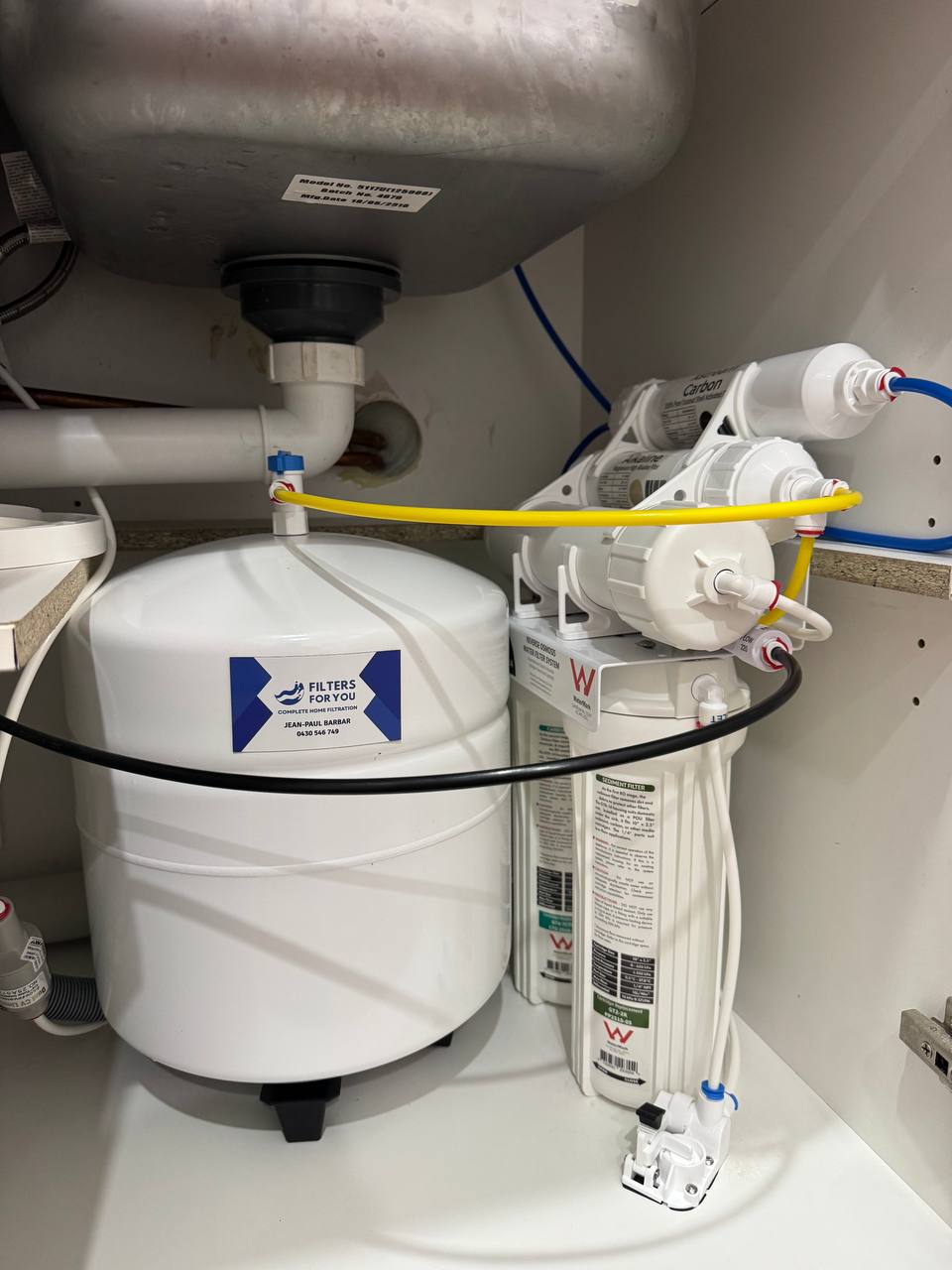
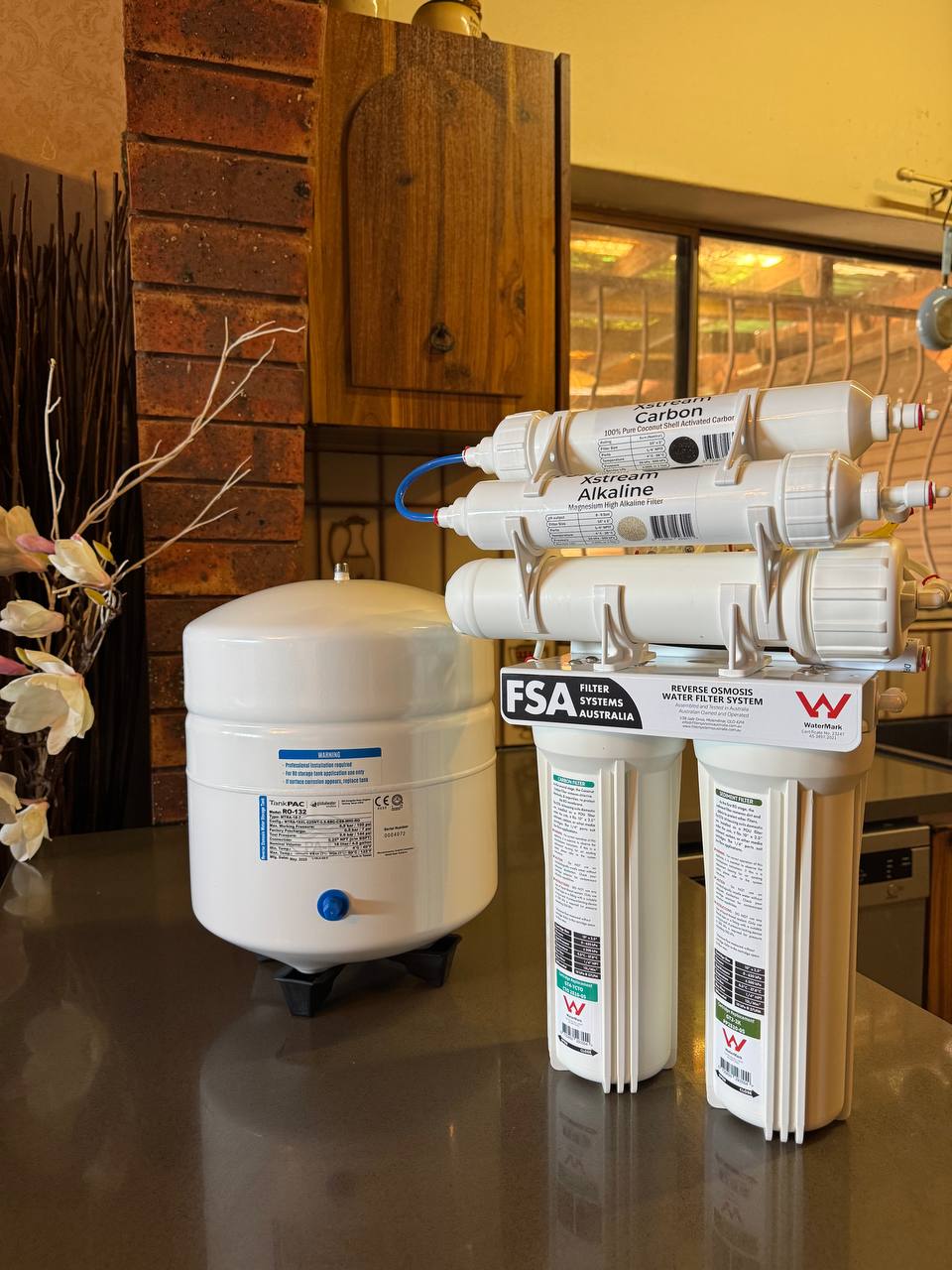
Reverse osmosis systems achieve very high chloramine removal through a combination of carbon pre-filtration and the RO membrane itself. The pre-filtration stages also protect the membrane from chloramine damage — an important design consideration that the systems Jean-Paul installs incorporate correctly.
Filter Types That Remove Chlorine from Sydney Tap Water
Carbon Block Filters (Under-Sink)
The most cost-effective and reliable solution for chlorine and chloramine removal at the kitchen tap. Carbon block filters — like those in the Pure Essential ($550) — force water through dense activated carbon under pressure. The contact time is sufficient for effective chloramine adsorption, and the block format prevents channelling (water finding the path of least resistance through the media). Annual cartridge replacement around $80–$120 maintains performance.
Reverse Osmosis Systems
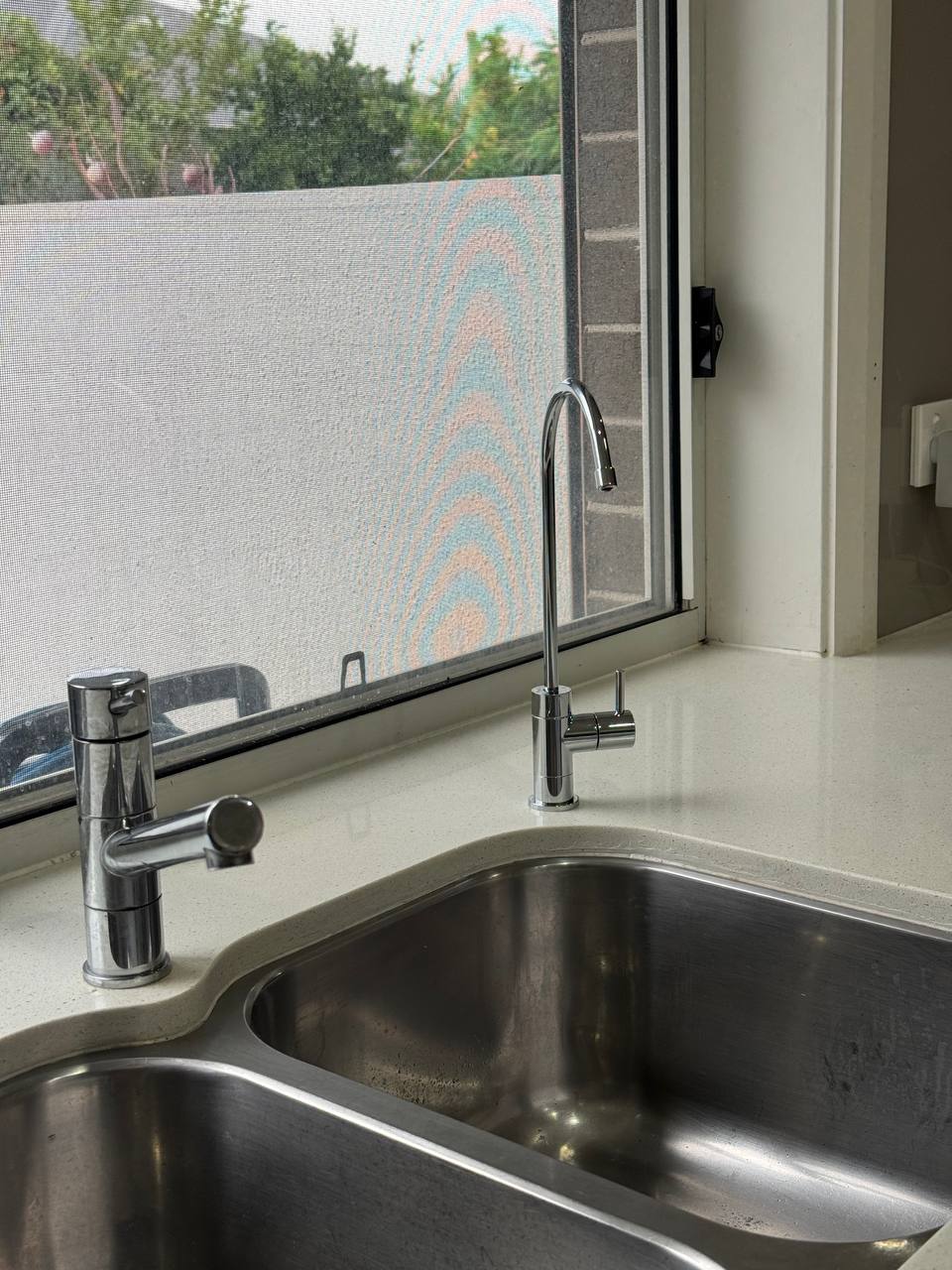
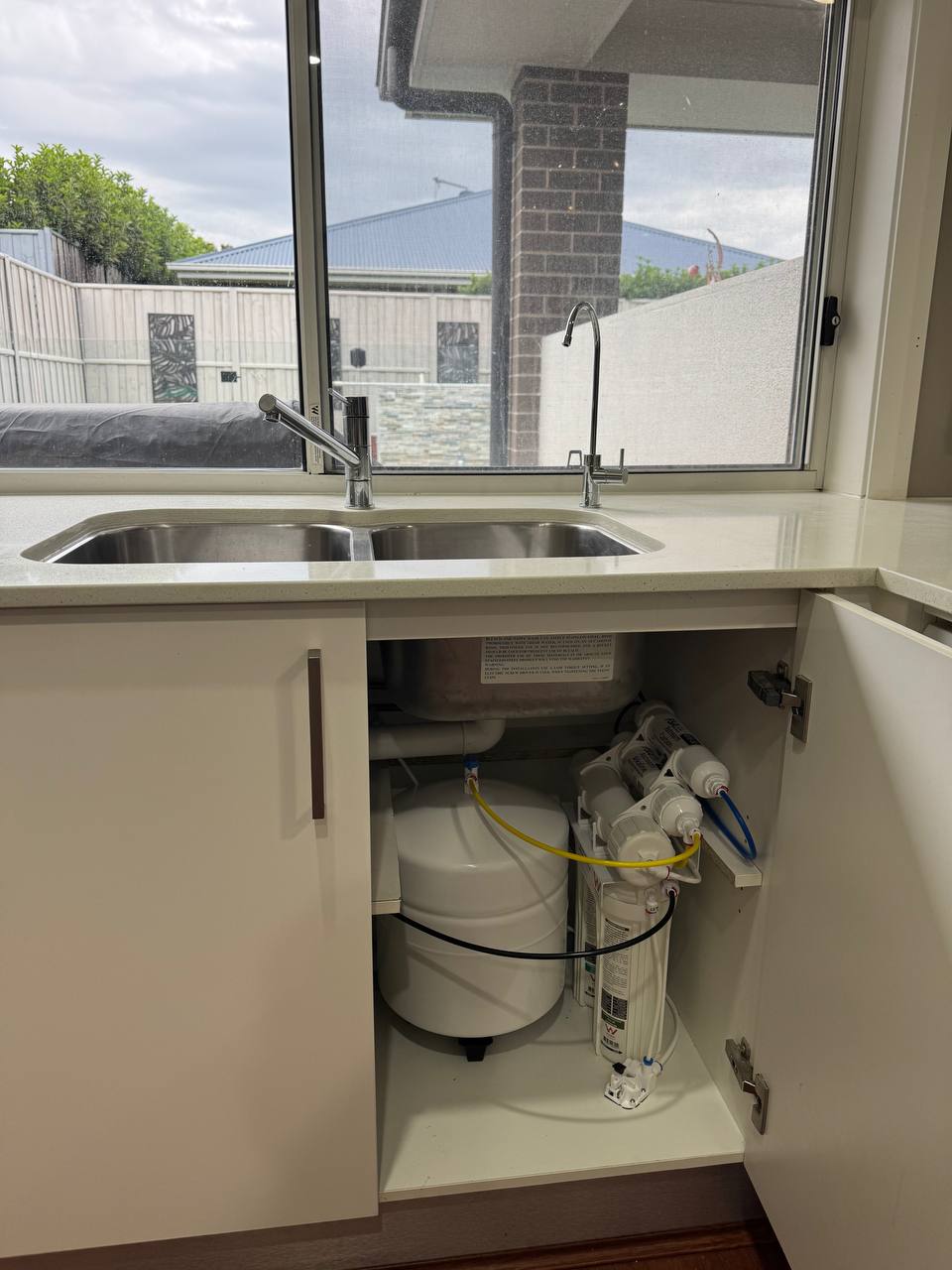
The Pure Plus+ 5-Stage RO ($840) and Pure Premium 7-Stage RO ($1,180) include carbon block pre-filtration stages specifically designed to remove chloramine before water reaches the RO membrane. RO then removes the remaining dissolved contaminants — fluoride, nitrates, heavy metals and microplastics. The combined result is the purest possible drinking water: chloramine-free and stripped of essentially all dissolved contaminants.
Whole House Carbon Filtration
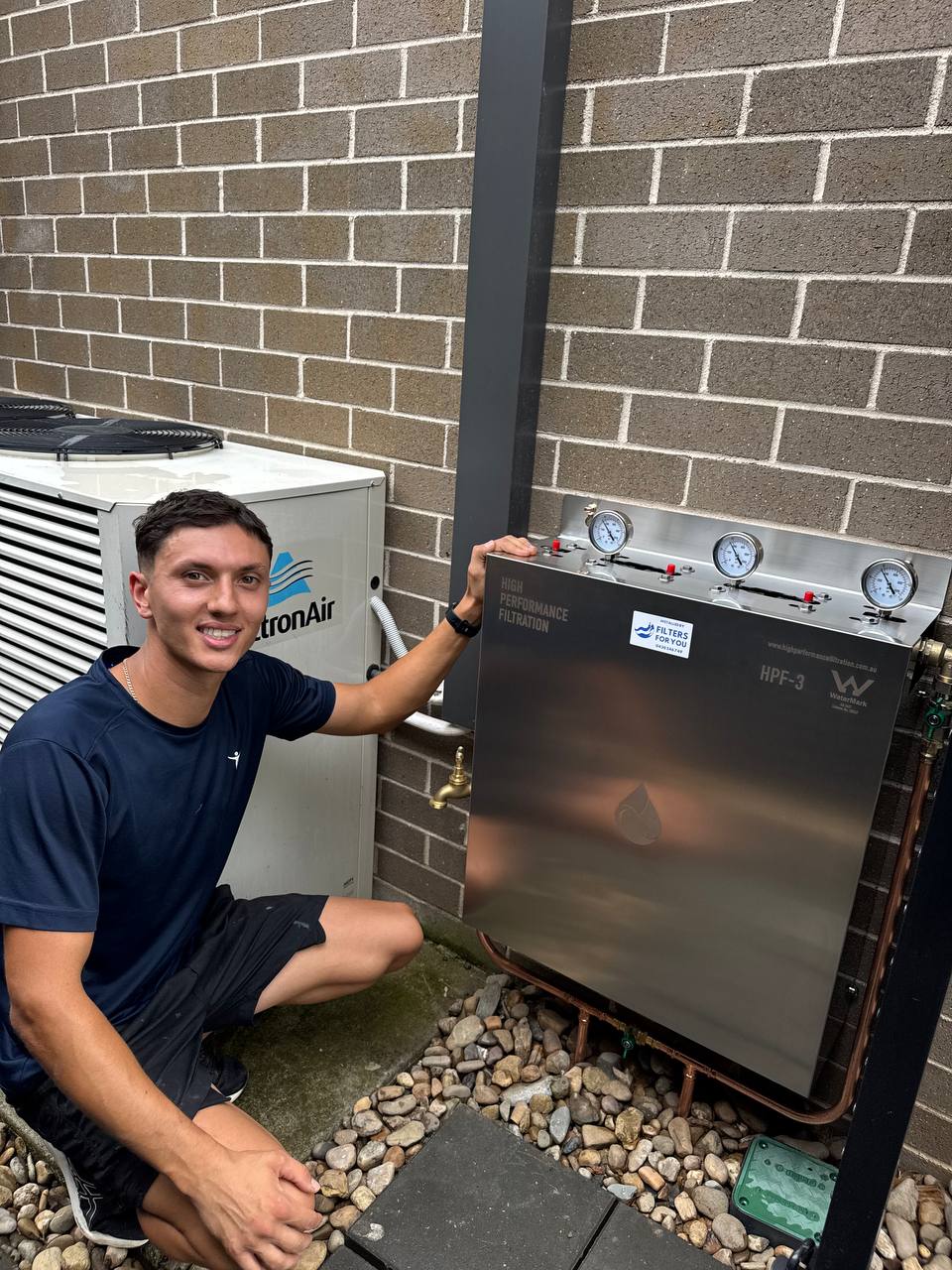
The HPF-3 Whole House system (from $3,150) uses a high-performance carbon block column at the water mains. Every tap, shower and appliance in the home receives filtered water. This is the right choice for families who want chlorine removed from shower water, bath water and laundry water — not just the kitchen tap.
Why Chloramine Removal Requires Activated Carbon Block
Not all activated carbon is equally effective against chloramine. The key factors are:
- Carbon block vs GAC — carbon block wins. Granular activated carbon has voids between particles that allow water to channel past without full contact. Carbon block eliminates this.
- Contact time — chloramine requires longer contact with carbon than free chlorine. Under-sink systems with high flow rates may underperform on chloramine removal. The systems Jean-Paul installs are designed with appropriate flow rates for effective chloramine reduction.
- Carbon pore structure — coconut-shell carbon has a micro-pore structure that is particularly effective for chloramine adsorption, outperforming coal-based carbon. The Pure Essential uses coconut-shell carbon block media.
- Cartridge freshness — as carbon becomes saturated, its effectiveness declines. Annual cartridge replacement (around $80–$120/year) is essential to maintain chloramine removal performance.
What Customers Notice After Chlorine Filter Installation
The most consistently reported feedback from Jean-Paul's customers is how different their water tastes immediately after installation. Customers who have lived with chloramine-affected tap water for years often describe the filtered water as "like a different substance" — clean, neutral, flat in the best sense. Coffee and tea made with filtered water tastes noticeably better. Cold water is more refreshing. Ice cubes don't smell of chlorine.
Customers with eczema or sensitive skin who have the HPF-3 Whole House system installed often report improvement in their skin after chloramine is removed from their shower water. While this is anecdotal and individual results vary, it reflects the understanding that chloramine's known skin effects are reduced when exposure is removed.
Jean-Paul's Recommendations for Chlorine-Concerned Sydney Households
Jean-Paul's recommendation depends on your goal:
- If your primary concern is drinking water taste: the Pure Essential carbon block under-sink filter ($550) is the right choice. It's the most cost-effective solution and addresses chloramine removal effectively.
- If you want chloramine removal plus full contaminant purification (fluoride, heavy metals, microplastics): the Pure Plus+ 5-Stage RO ($840) is the recommended upgrade.
- If you want chlorine-free water throughout the entire home — showers, baths, laundry: the HPF-3 Whole House system (from $3,150) is the solution, optionally combined with an under-sink RO for drinking water.
Call Jean-Paul on 0430 546 749 to discuss your specific situation. He'll give you an honest recommendation based on your home, your water and your priorities — not just the most expensive option.
Book a Chlorine Removal Filter Installation Across Sydney
Jean-Paul installs chlorine and chloramine removal filters across all of Greater Sydney. Most installations are scheduled within 3–5 business days. See our under-sink water filter options, whole house water filter guide, or all water filter systems. Check our Sydney water safety guide or water filter cost guide for more information.