What Are PFAS — Per- and Polyfluoroalkyl Substances?
PFAS is an umbrella term for a large group of man-made chemicals — more than 9,000 variants — that share a unique molecular structure: a chain of carbon and fluorine atoms. The carbon-fluorine bond is one of the strongest in organic chemistry, which is why PFAS do not break down in the environment, earning them the label "forever chemicals."
PFAS have been used since the 1950s in a wide range of industrial and consumer applications — non-stick cookware (PTFE/Teflon), food packaging, stain-resistant fabrics, firefighting foam (aqueous film-forming foam, or AFFF), and waterproofing agents. Their exceptional durability made them commercially valuable; their persistence in the environment and the human body has made them a growing public health concern.
The two most studied PFAS compounds are PFOA (perfluorooctanoic acid) and PFOS (perfluorooctane sulfonate). Both have been linked in research to various health effects at elevated concentrations, including impacts on immune function, thyroid health, cholesterol levels and reproductive outcomes. The Australian Health and Medical Research Council and international bodies have tightened guidelines for acceptable PFAS levels in drinking water over recent years as evidence has accumulated.
PFAS in Sydney Water — What You Need to Know
Sydney Water regularly monitors its supply network for PFAS and publishes quality data. Sydney's main drinking water catchments — including Warragamba Dam and the Upper Nepean system — have generally remained below guideline values for PFAS, particularly compared to areas of Australia where AFFF was historically used at airports and military bases (such as parts of Darwin, Williamtown and Katherine, NT).
However, several important caveats apply:
- PFAS guidelines have been progressively tightened as scientific evidence evolves. A concentration considered acceptable five years ago may be higher than current advisory levels.
- PFAS bioaccumulate in the body — meaning that even low-level chronic exposure adds up over time.
- Sydney's distribution network is extensive, and PFAS from industrial or urban runoff sources can affect water quality at the local level even when catchment concentrations are low.
- Reverse osmosis provides a precautionary layer of protection regardless of current monitoring results — it removes PFAS along with every other category of dissolved contaminant.
For the most current Sydney Water PFAS monitoring data, visit sydneywater.com.au. For PFAS reduction at your tap regardless of source, an RO system installed by Jean-Paul is the practical solution.
Which Filter Types Remove PFAS?
Not all filter types are equally effective against PFAS, and understanding the differences matters when making your decision:
Reverse Osmosis — Gold Standard (95%+ removal)
RO is the most effective residential technology for PFAS removal. The semi-permeable RO membrane blocks PFAS molecules (which are relatively large compared to water molecules) from passing through. Studies consistently show 90–99% removal of long-chain PFAS (PFOA, PFOS) and 85–95%+ removal of short-chain variants. An RO system installed under your kitchen sink provides clean drinking and cooking water with minimal PFAS content.
Activated Carbon Filters — Partial Reduction (variable)
Activated carbon, including granular activated carbon (GAC) and carbon block media, can adsorb some PFAS compounds — particularly longer-chain variants. However, the removal rate is highly variable, depends on contact time and the specific PFAS compounds present, and degrades as the carbon reaches saturation. Carbon filters are not reliable for comprehensive PFAS removal and should not be the primary choice if PFAS reduction is the goal. The Pure Essential ($550) uses carbon block filtration — it improves water quality significantly but is not a PFAS removal system.
Standard Under-Sink Filters — Limited Effect
Standard twin-stage carbon filters reduce some PFAS but cannot be relied upon for comprehensive removal. If PFAS removal is your priority, reverse osmosis is the correct choice.
Whole House Systems — Carbon-Based, Partial
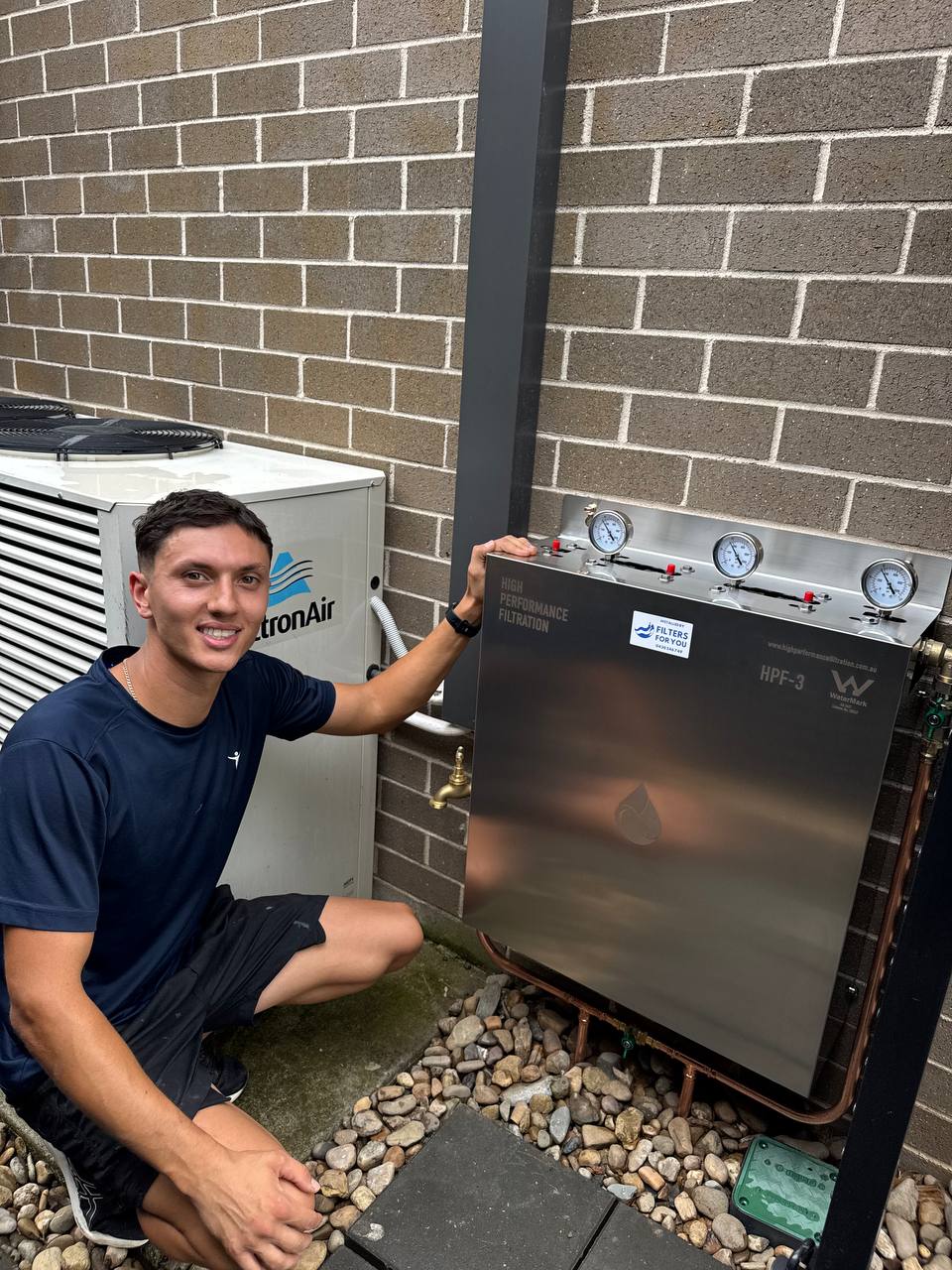
The HPF-3 Whole House system uses high-performance carbon filtration that provides some PFAS reduction for whole-home water (all taps, showers, appliances). For the most thorough approach, Jean-Paul recommends combining a whole house system with an under-sink RO unit for your drinking water.
Why Reverse Osmosis Is the Gold Standard for PFAS
The RO membrane operates through a physical exclusion mechanism — it is not a chemical process that can be bypassed. PFAS molecules, even the short-chain variants, are too large to pass through the pores of an intact RO membrane. This is why RO achieves consistently high removal rates regardless of which specific PFAS compounds are present in your water.
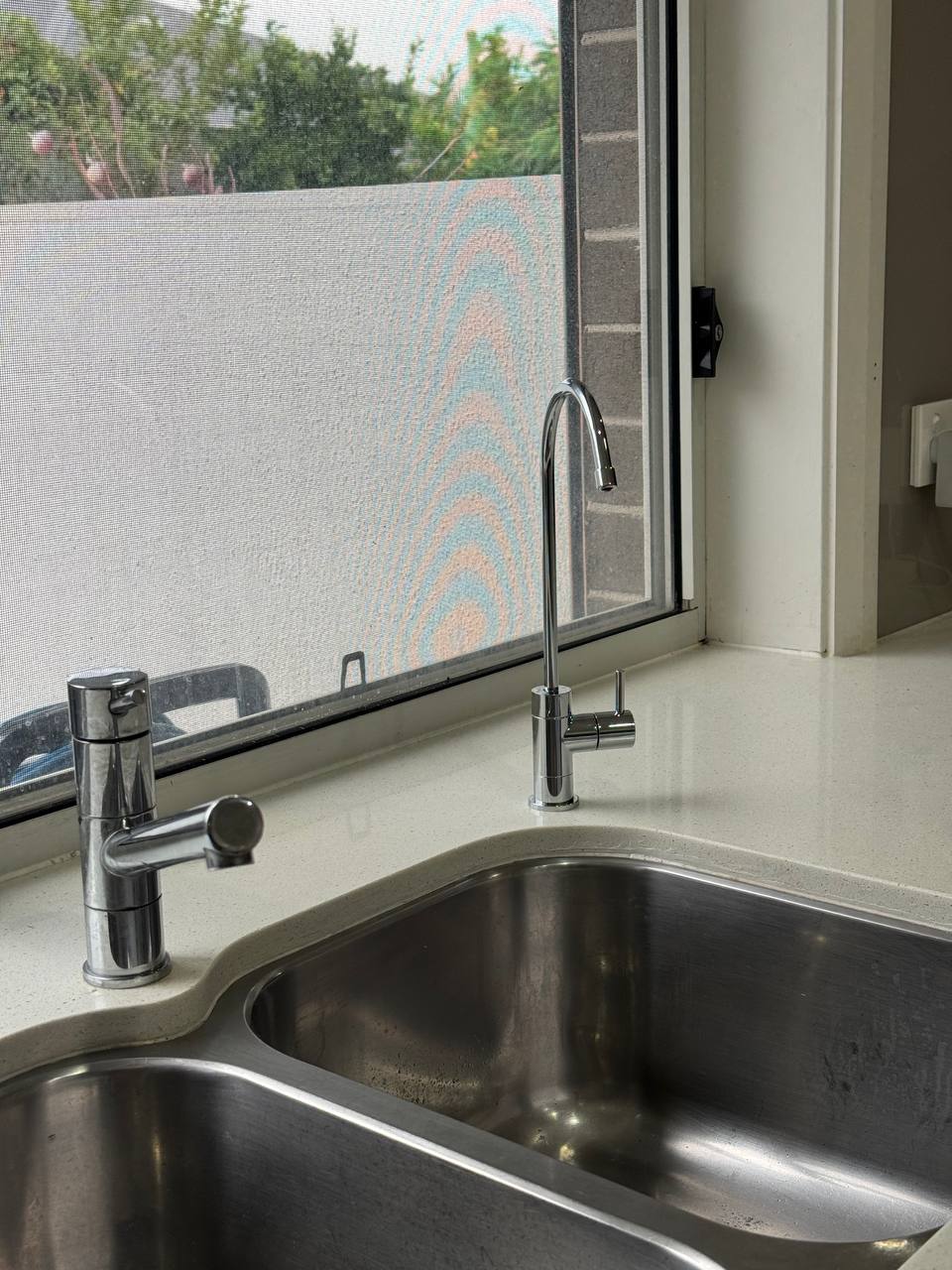
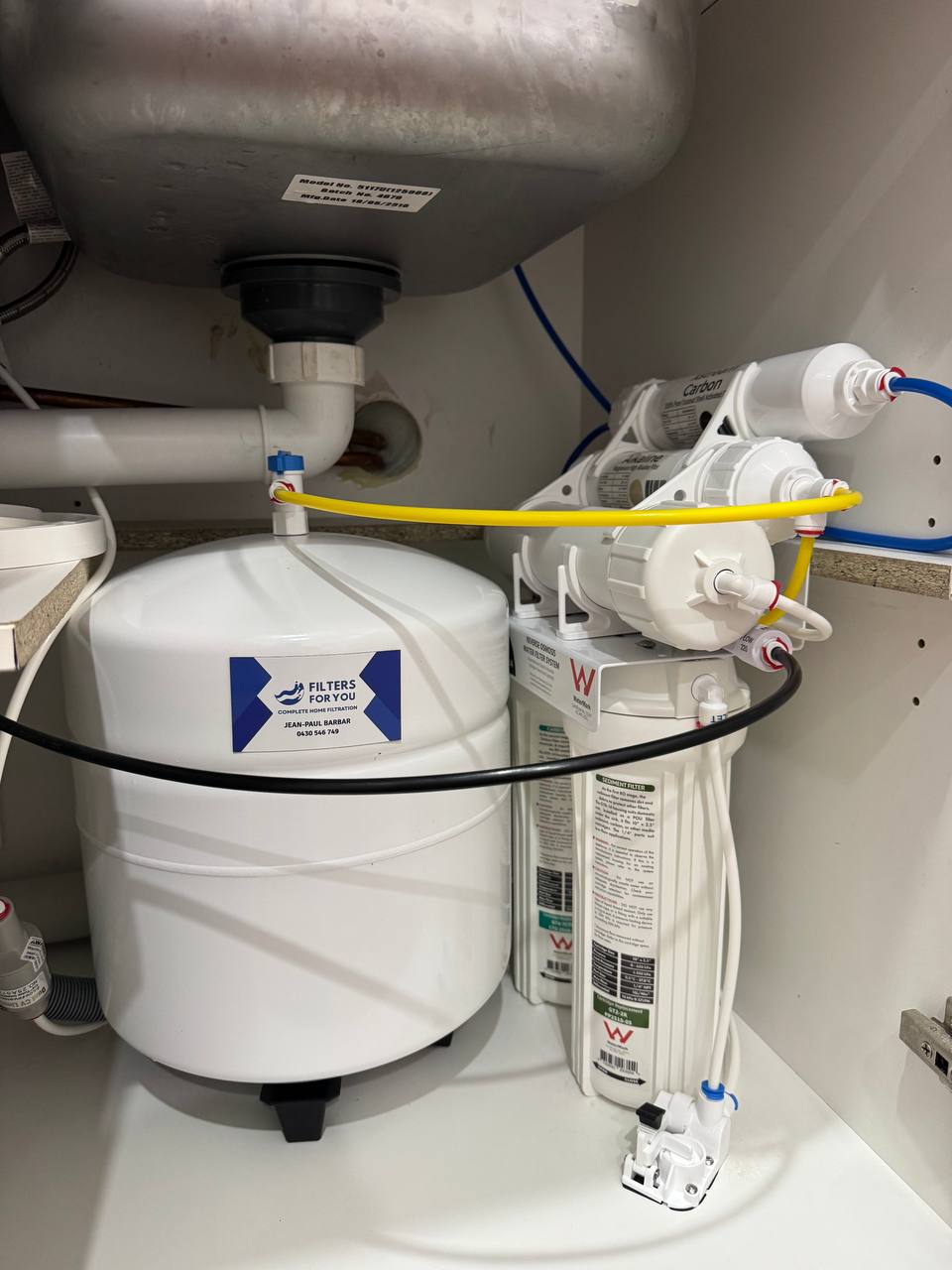
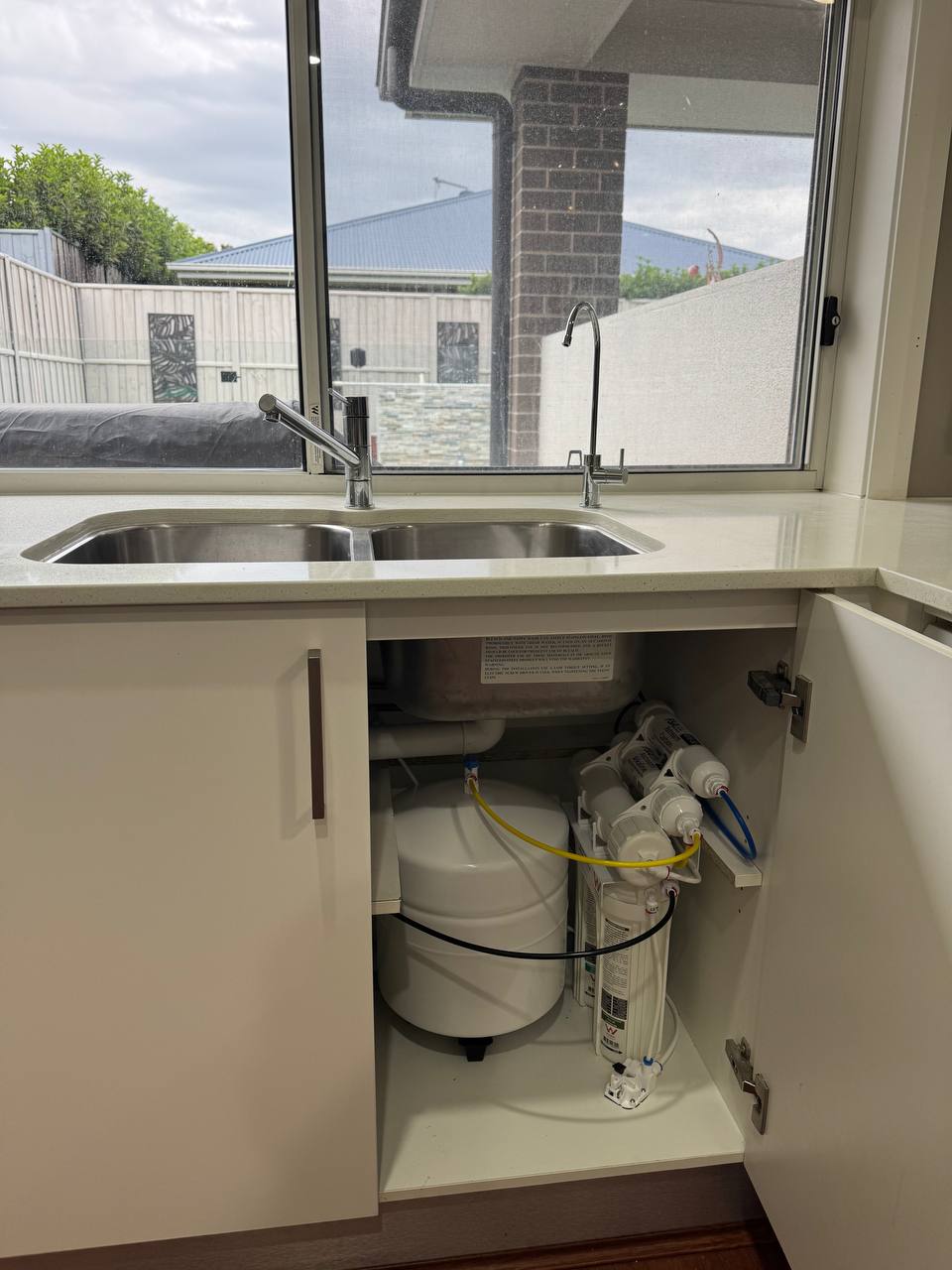
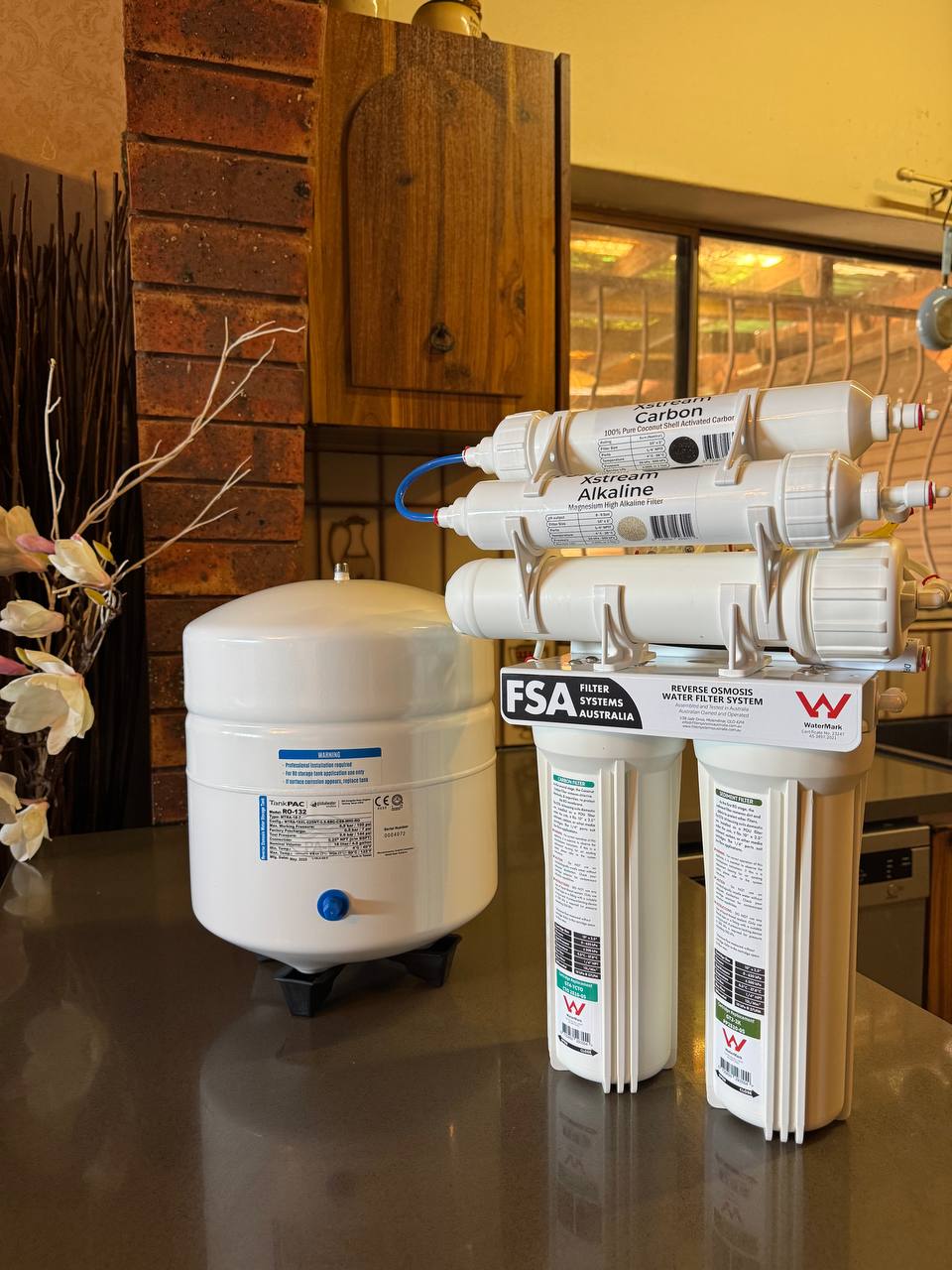
The Pure Plus+ 5-Stage RO ($840) and Pure Premium 7-Stage RO ($1,180) both use high-quality RO membranes with a nominal pore size of 0.0001 microns — far smaller than any PFAS molecule. Both systems also include pre-filtration stages (sediment and carbon block) that protect the membrane and extend its life, and a dedicated filtered tap at your bench so PFAS-reduced water is always at hand for drinking, cooking, ice and baby formula.
Australian PFAS Guidelines and Sydney Water's Monitoring
The Australian Drinking Water Guidelines (ADWG) have been updated to reflect evolving PFAS science. Current guidance values include PFOS at 0.00007 mg/L and PFOA at 0.00056 mg/L in drinking water. Sydney Water monitors at multiple points across its distribution network and has consistently reported values below these guideline limits for its main supply.
It's worth noting that PFAS guidelines globally are moving toward lower and lower thresholds as research progresses. The US EPA set a PFOA guideline of just 0.000004 mg/L in 2024 — an order of magnitude lower than the current Australian value. Whether Australian guidelines will converge with this level in coming years is not certain, but the trend in science is consistently toward more caution.
A reverse osmosis system provides a buffer against both current PFAS concentrations and any future regulatory changes. Once installed, it continuously reduces PFAS to near-undetectable levels at your tap — independently of what monitoring data shows at the source.
Jean-Paul's PFAS Filter Installations Across Sydney
Jean-Paul has installed PFAS removal reverse osmosis systems throughout Sydney — from the eastern suburbs and inner city to the Hills District, northern beaches, St George and beyond. Many customers come to him specifically after reading about PFAS in the news or after receiving advice from their GP or naturopath to reduce chemical exposure in their drinking water.
He approaches every installation the same way: a clear explanation of what the system removes and what it doesn't, a neat professional install that takes approximately two hours, and a thorough walkthrough so you understand exactly how your system works and when it needs maintenance. Call 0430 546 749 to discuss which system is right for your home.
Book a PFAS Removal Water Filter in Sydney
Jean-Paul services all Sydney suburbs. Most installations are scheduled within 3–5 business days. For more information see our full PFAS water filter guide, our reverse osmosis system page, or our Sydney water safety guide. See all water filter systems or check the water filter cost guide.