PFAS in Sydney, Which Suburbs Are at Higher Risk?
PFAS contamination in Greater Sydney is concentrated primarily in areas near former and current military bases where PFAS-containing firefighting foam (AFFF) was historically used. The most documented areas include:
- Richmond and North Richmond: RAAF Base Richmond has been identified as a source of PFAS contamination in local waterways including the Hawkesbury River. Residents in this corridor may have elevated exposure, particularly those using tank water or drawing from local water sources.
- Windsor and Hawkesbury: Downstream of Richmond, the Hawkesbury area is part of the PFAS monitoring zone established by NSW EPA and the Department of Defence. Sydney Water monitors this catchment area.
- Williamtown (Hunter Valley): While north of Greater Sydney, RAAF Base Williamtown is one of Australia's most significant PFAS contamination sites and demonstrates the scale of the issue at military bases across NSW.
Sydney Water's treated drinking water supply generally meets Australian Health Advisory Levels for PFAS. However, advisory levels are precautionary thresholds, not guarantees of zero risk. For households that want maximum certainty about what is in their drinking water, reverse osmosis is the most practical and effective solution available.
What Are PFAS and Why Do They Matter?
PFAS (per- and polyfluoroalkyl substances) is a broad term covering more than 4,700 synthetic chemicals that share a highly stable carbon-fluorine bond. This bond makes PFAS extraordinarily resistant to breakdown, in the environment, in water treatment processes, and in the human body. The two most studied compounds are PFOA (perfluorooctanoic acid) and PFOS (perfluorooctane sulfonate), both of which have been phased out of most manufacturing but remain in the environment from decades of past use.
Australian and international health bodies have established precautionary Health Advisory Values for PFOA and PFOS in drinking water. Research into health effects continues, with associations noted between long-term PFAS exposure and immune function, thyroid health, cholesterol levels, and developmental outcomes in children. No definitive causation has been established for typical drinking water exposure levels, but health-conscious households, particularly those with young children or pregnant women, often choose to filter as a precaution.
Does a Standard Water Filter Remove PFAS?
Not reliably. The key points to understand:
- Standard carbon block filters: Can reduce some PFAS compounds depending on carbon quality and contact time, but performance is inconsistent and most standard under-sink filters are not tested or rated for PFAS removal.
- Pitcher filters: Negligible PFAS removal. Not designed for this application.
- Reverse osmosis: The gold standard, removing 95%+ of PFOA and PFOS. The semi-permeable membrane physically blocks PFAS molecules based on size exclusion and charge. Jean-Paul's Pure Plus+, Pure Premium, and Pure Advanced systems all achieve this level of removal.
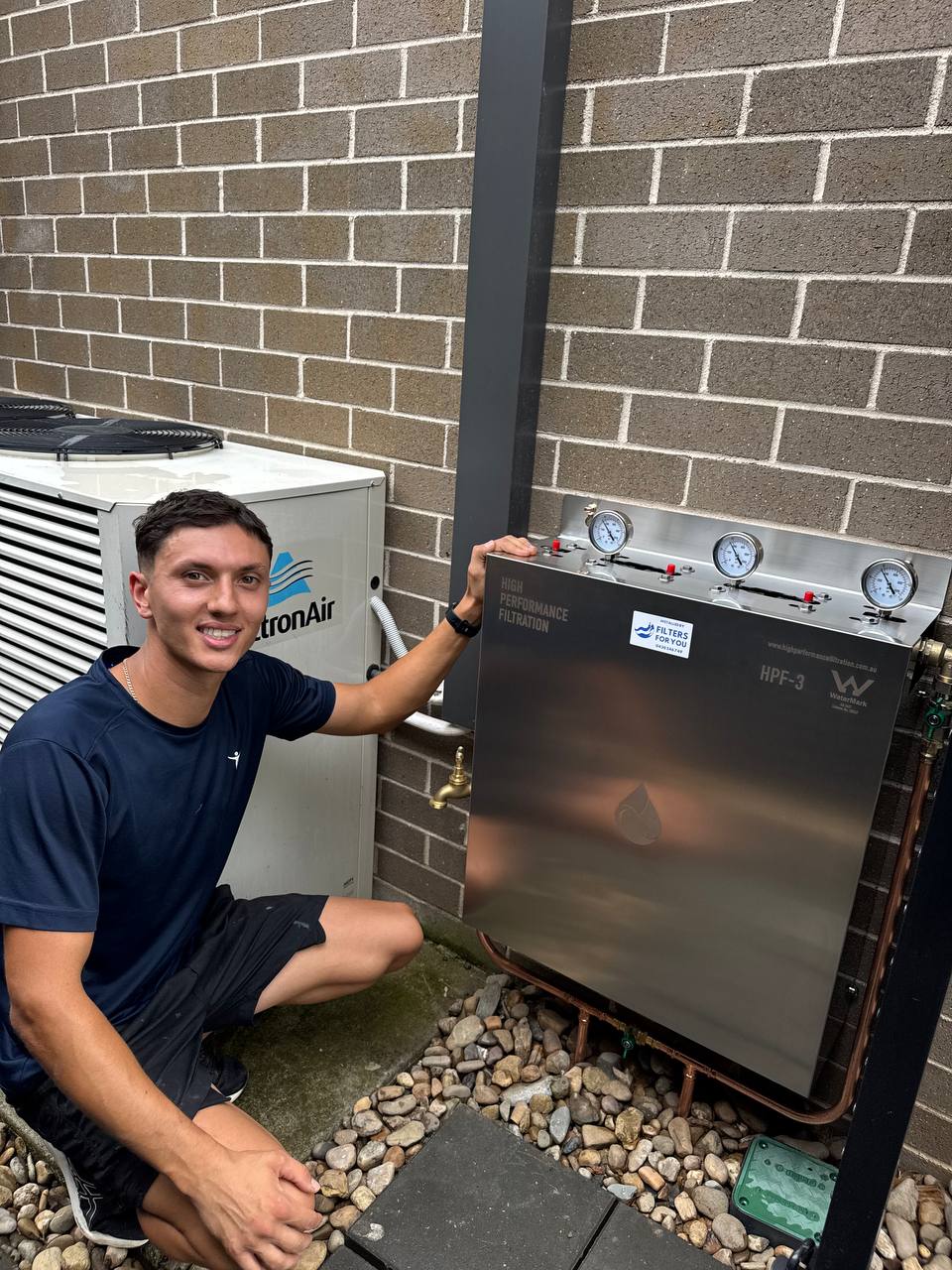
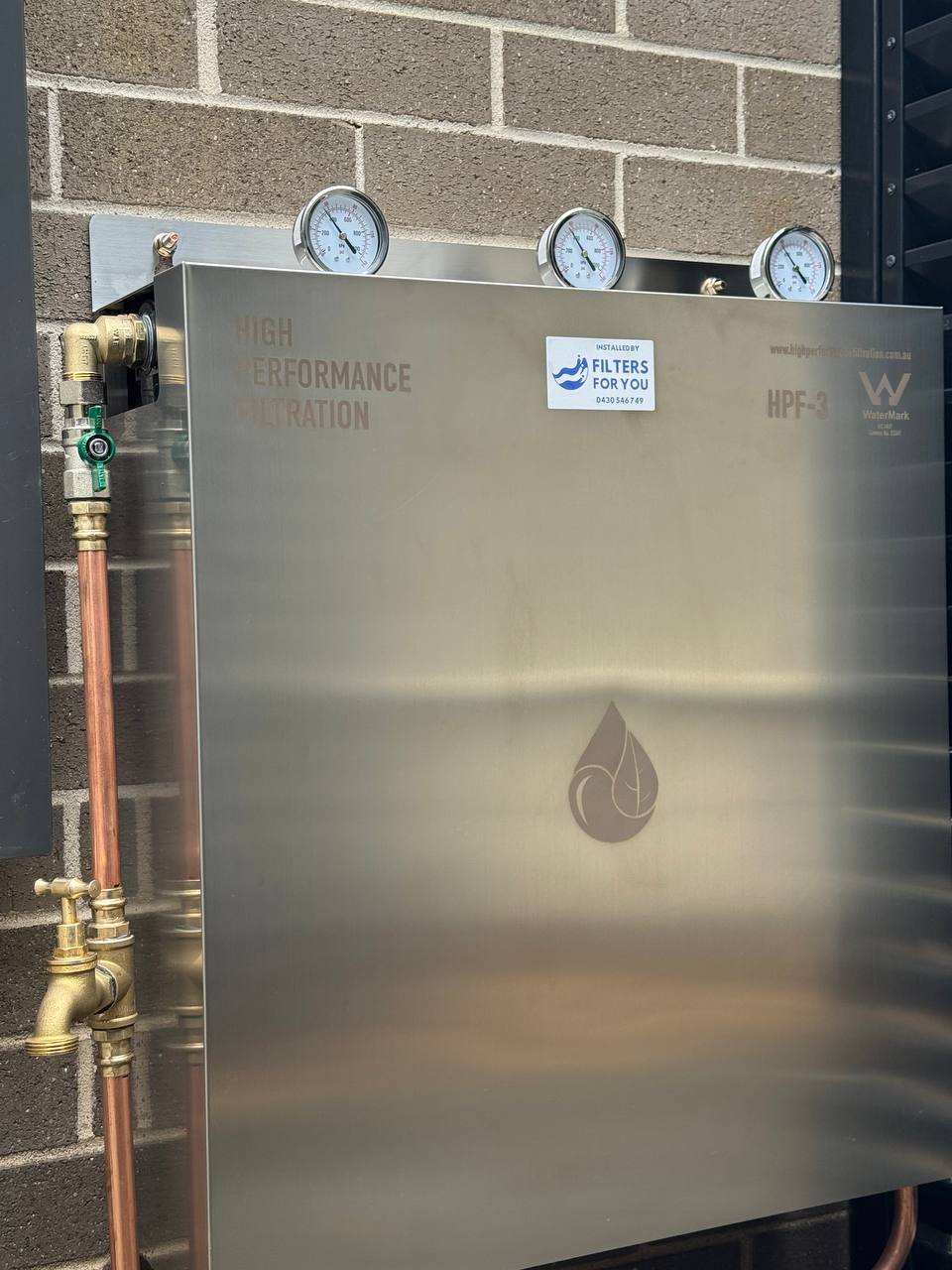
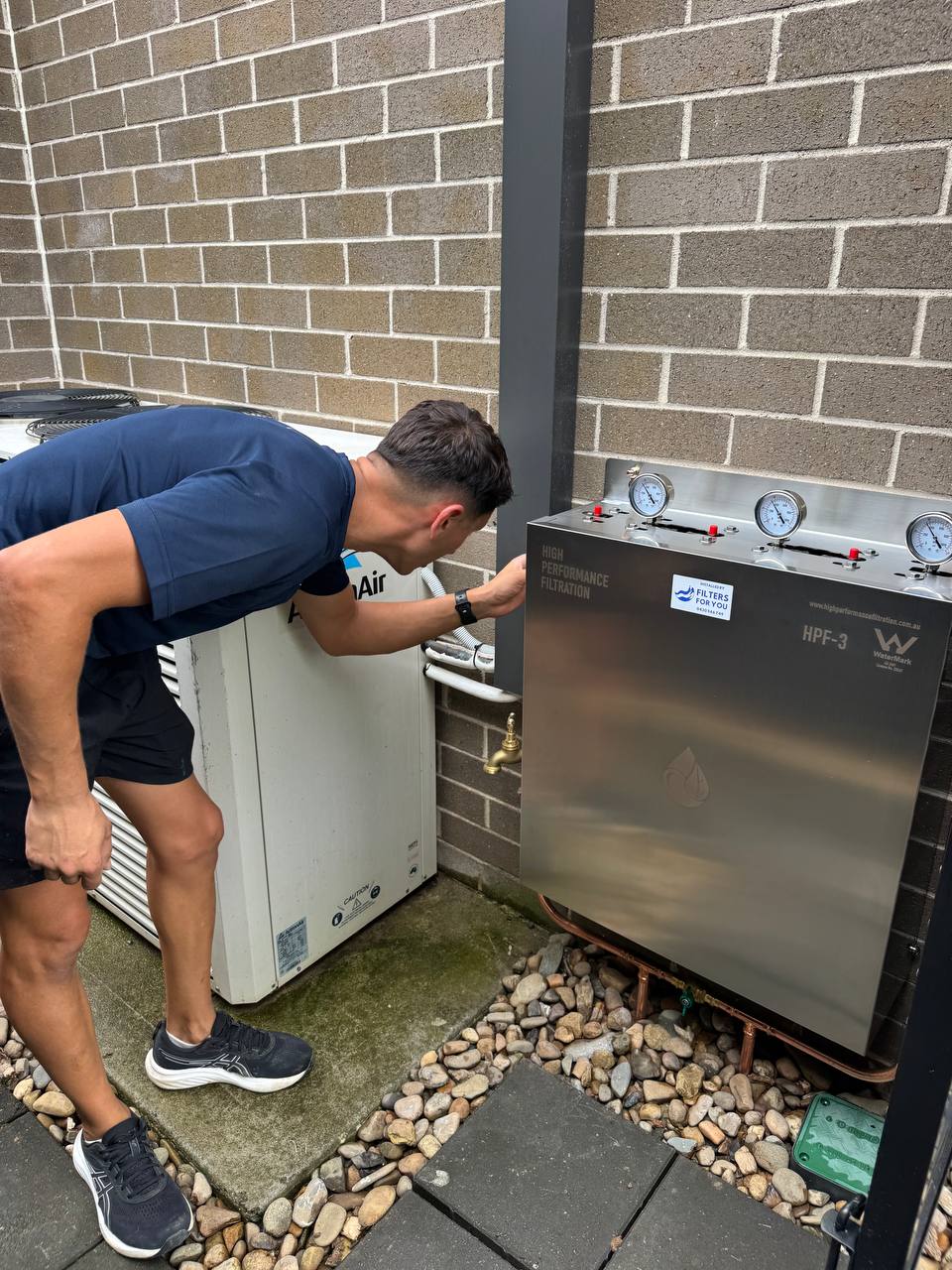
- Whole house carbon systems (HPF-3): Provides whole-home filtration including partial PFAS reduction, but not to the level of a dedicated RO unit. For drinking water, pair with an RO unit for maximum protection.
If you are in a higher-risk area or simply want the peace of mind of knowing your drinking water is as clean as possible, call Jean-Paul on 0430 546 749. He will give you honest advice, no pressure, no upselling on the day.
PFAS Water Filter Systems Jean-Paul Installs
All three of the following reverse osmosis systems achieve 95%+ PFAS removal and are available supply and installed at fixed all-inclusive prices:
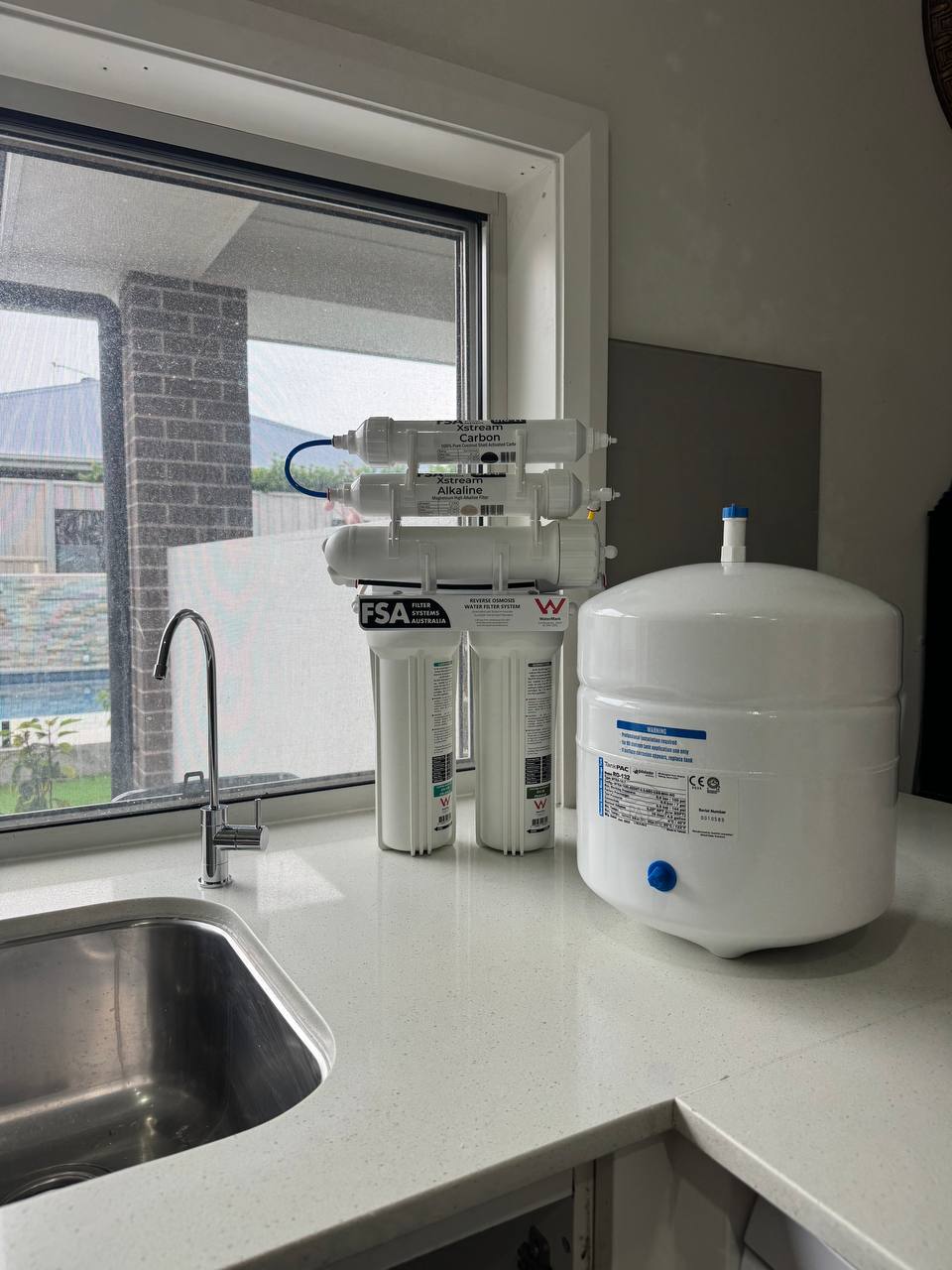
The Pure Plus+ 5-Stage RO ($1,280) is Jean-Paul's most popular entry-point system. Five stages including sediment pre-filter, carbon block, high-rejection RO membrane, and post-carbon polishing. Compact, fits under most kitchen sinks, includes a dedicated filtered tap and storage tank. The first year of clean water from this system pays for itself in avoided bottled water costs.
The Pure Premium 7-Stage RO ($1,590) takes it further with alkaline remineralisation and a hydrogen-rich water stage. For families who want maximum filtration plus mineral-rich water at the tap. Seven stages including the same PFAS-removing RO membrane as the Plus+.
The Pure Advanced 5-Stage Quick Change Alkaline RO ($1,281.88) uses a quick-change cartridge design that makes annual maintenance faster and cleaner. Five stages including alkaline remineralisation. Jean-Paul's recommendation for households who want the easiest long-term maintenance experience alongside full PFAS removal.
North-West Sydney PFAS: Jean-Paul's Installations in Richmond and Hawkesbury
Jean-Paul specifically services the Richmond, North Richmond, Windsor, and Hawkesbury areas. Residents in these suburbs have contacted Filters For You with specific PFAS concerns, and Jean-Paul has installed RO systems throughout this corridor. He understands the local water quality context and can advise on whether a whole-house carbon system, an RO unit, or both makes sense for your property.
For detailed information on PFAS in the Richmond-Hawkesbury area, see the dedicated Richmond and Hawkesbury PFAS water filter guide. For the broader technical guide to PFAS filtration options, read the PFAS removal water filter guide.
Book Your PFAS Water Filter Installation in Sydney
Jean-Paul installs PFAS removal water filters across all Sydney suburbs and the North-West corridor. Most installations are scheduled within 3–5 business days. Call 0430 546 749 (Mon–Sat 7am–6pm) or complete the form below. Fixed all-inclusive prices, no obligation to commit before you receive your quote.